深セン昭和舞台照明有限公司

Expand Your Product Line: Why the Mini BSW Profile Moving‑Head Light Deserves a Spot in Your Gear Inventory

For stage rental companies, light designers and event system integrators, expanding product portfolios is critical for business growth. When projects demand beam effects, custom gobos, wash lighting and precise beam shaping all at once, purchasing multiple standalone fixtures leads to high inventory costs, heavy logistics burdens and extensive man‑hours for on‑site programming. A well‑balanced and stable LED framing moving head light delivers versatile performance for a wide range of productions, empowering your business to take on theatre shows, Livehouse gigs, corporate events, wedding banquets and more. This buying guide is written from the perspective of rental operators, lighting designers and event integrators. It breaks down selection criteria for a beam spot wash framing moving light, explains the core strengths of a CMY color mixing LED framing moving light, and outlines common procurement pitfalls to help you select the right fixtures and grow your product offering efficiently.

Real‑World Pain Points in the Rental & Event Integration Industry
Overseas stage rental firms and event integrators consistently face several bottlenecks when expanding their equipment fleets.
1. Sky‑High Inventory and Logistics Costs Caused by Multi‑Fixture Purchases
In the past, a complex production required separate beam lights, spot moving heads, wash fixtures and dedicated profile framing units. Stocking many different models takes up valuable warehouse space. More fixtures mean more flight cases, greater total weight and higher shipping expenses. For cross‑border rental or touring productions, transport costs can eat directly into project profit margins. Maintaining a broad range of hardware also increases spare‑parts stock‑keeping overhead.
2. Low‑Cost 3‑in‑1 Fixtures Deliver Compromised Output for Professional‑Grade Projects
Many budget 3‑in‑1 moving heads fail to balance beam, spot and wash performance. ビーム brightness drops significantly when switching modes, colour gamut for wash lighting is limited, and true beam‑shaping framing capability is absent. These entry‑level units can only handle basic ambient lighting. For high‑end jobs such as theatre performances, corporate product launches and premium weddings that demand crisp, well‑defined beam geometry, generic 3‑in‑1 lights cannot produce clean‑edged geometric beams — resulting in lost high‑value contracts.
3. Poor Reliability Equals Higher Failure Risk in Rental Cycles
Rental fixtures endure frequent handling, repeated transport and fast rigging and de‑rigging on trusses. They are exposed to temperature swings and vibration during transit. Some low‑end framing moving head light models suffer from sub‑par mechanical build quality: sticking framing shutters, positioning drift and unexpected thermal shutdown under heavy‑duty operation. Without photoelectric auto‑reset functions, manual recalibration by crew is required after physical impact. In‑show malfunctions can trigger serious on‑site incidents and damage your company’s reputation.
4. Poor Control Compatibility Creates Cumbersome Workflows with Advanced Consoles
Many budget framing moving heads feature illogical DMX channel layouts and lack RDM remote device management. For large multi‑fixture rigs, lighting crews have to climb to each unit on trusses to adjust DMX address codes locally. This wastes critical setup time and delays the whole production schedule.
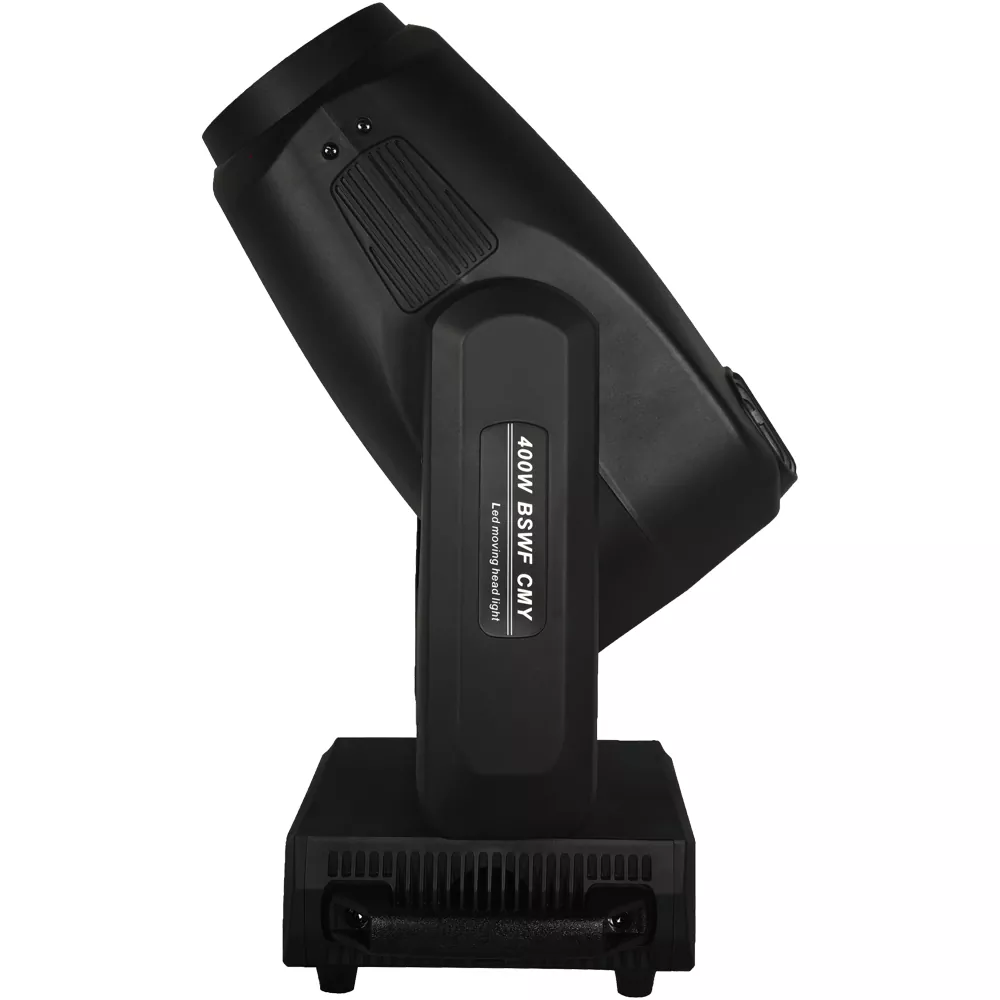
Against these industry pain points, the Mini BSW Profile Moving Head stands out as a cost‑effective addition to expand your rental inventory. One single fixture delivers four core functions: beam, spot, wash and framing beam shaping. Equipped with CMY seamless colour mixing, it balances performance, portability and rental‑oriented durability and allows service providers to bid for a broader variety of commercial projects.
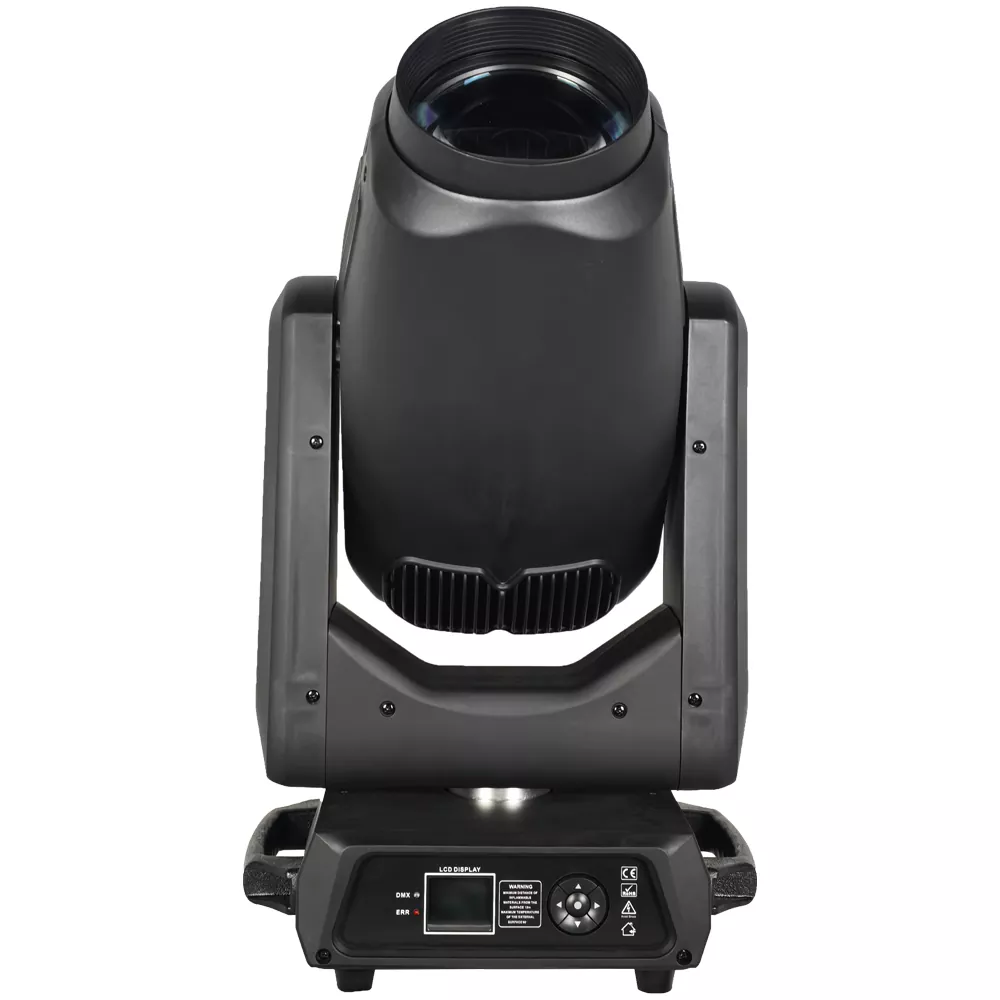
Key Hardware Selection Criteria for LED Framing Moving Head Light
When sourcing a beam spot wash framing moving light, do not rely solely on wattage figures. Focus on hardware features that directly impact real‑world output and long‑term rental durability.
1. Light Source and Optical Zoom System
Rated power does not equal real‑world brightness. Prioritise fixtures built around a high‑performance 400 W LED module with 4‑42° continuous linear zoom. At the narrow 4° setting, it produces sharp, powerful beams for beam‑heavy shows. Zoomed out to 42°, it delivers even wash coverage. One unit covers both beam and wash requirements. Always review the manufacturer’s published lux photometric data; optical design creates massive brightness gaps even among units with identical power ratings.
2. CMY Colour‑Mixing with CTO Correction — A Threshold for Professional Productions
A genuine CMY color mixing LED framing moving light features independent Cyan, Magenta and Yellow filters for seamless additive colour mixing, paired with CTO colour‑temperature adjustment. It can generate countless intermediate shades and clean warm‑white tones. Inferior fixtures rely purely on static colour wheels, resulting in abrupt colour transitions with no half‑colour or rainbow‑flow effects, which fail theatre and broadcast studio standards for subtle colour rendition. High‑quality models combine a physical colour wheel for fast hard colour cuts alongside smooth CMY mixing.
3. Framing Shutter Mechanical Assembly
The framing system defines a profile moving head. Look for units with eight independently controlled framing shutters capable of 0‑90° collective rotation, enabling sharp‑edged rectangles, diamonds, triangles and custom geometric beam shapes. For rental use, pay close attention to mechanical build quality. Poorly built shutters tend to stick or lose positional accuracy after heavy cycles. Photoelectric auto‑correction is essential: after physical shock or jostling, motors can reset positions automatically and minimise live‑show risks. Select models with built‑in framing macro presets to save programming time for lighting designers.
4. Dual Prisms, Gobo Wheels and Frost Filter
Professional BSW profile moving heads should offer dual‑prism effects: a 3‑facet prism and a multi‑row array prism for diverse beam textures. A fixed gobo wheel plus a rotating interchangeable gobo wheel are expected; gobos support shake effects plus clockwise / counter‑clockwise scrolling at adjustable speeds. A 0‑100 % linear frost filter allows instant switching between razor‑sharp beams and soft diffused wash output, covering everything from high‑energy festival beam sequences to gentle ambient lighting for weddings.
5. Build Material, Weight and Thermal Management
Weight matters for rental workflows. Mini‑format units weighing 17‑18 kg can be rigged by one technician and cut labour costs. High‑temperature‑resistant flame‑retardant engineering plastic balances low weight and impact resistance. Intelligent variable‑speed fan control is indispensable: fan speed reduces for quiet performance modes, while thermal power‑back protection activates under high temperatures to prevent premature LED failure and unexpected shutdowns.
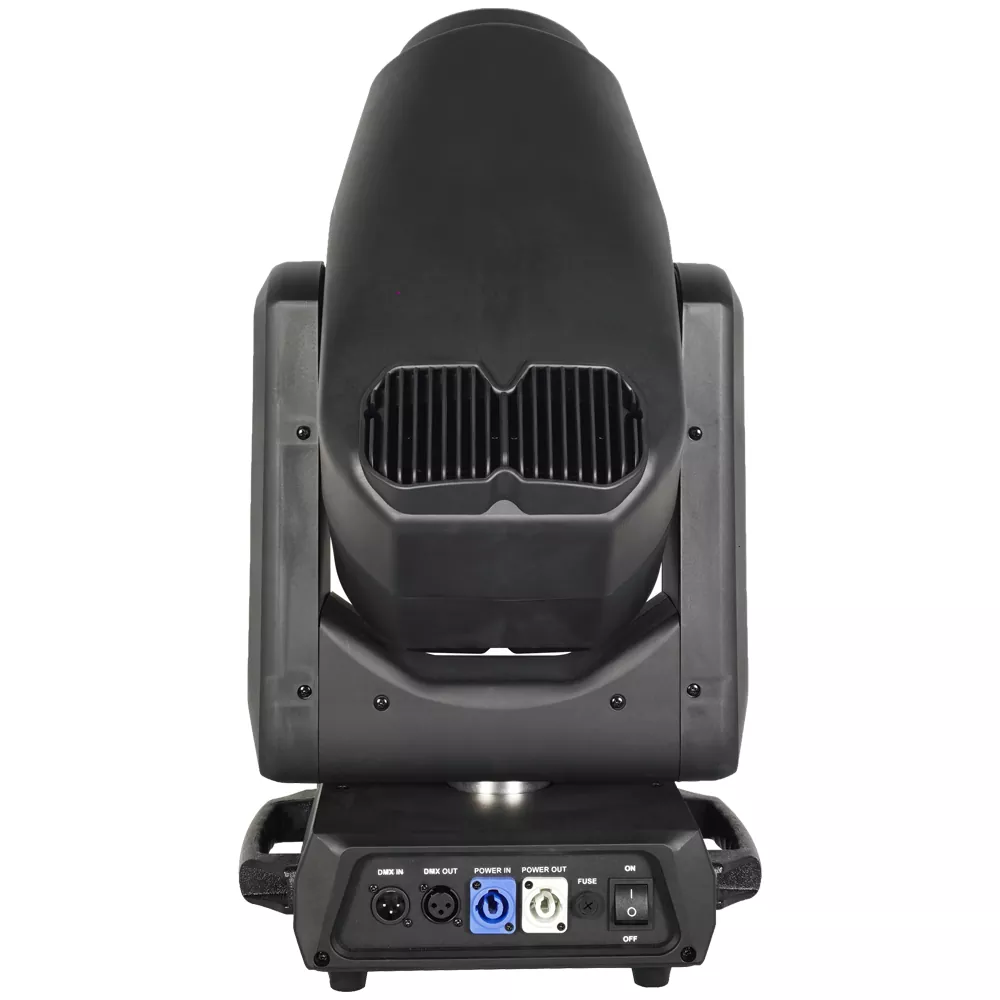
Which Control Features Matter for Lighting Designers and Large‑Scale System Integration
Control flexibility determines how well your LED framing moving head light fits into real‑world B‑to‑B rental and integration projects.
- DMX‑512 plus RDM Remote Device Management: Essential for professional installations. The full 36‑channel DMX layout grants complete access to beam, colour‑mixing, framing, prism and gobo functions. RDM support lets lighting technicians remotely modify DMX addresses, read fixture runtime and temperature status straight from the console, no truss climbing required.
- On‑board standalone modes: Beyond DMX control, built‑in auto shows, master‑slave synchronisation and sound‑activated modes enable standalone operation without a lighting console. This fits small bars and local event gigs.
- Display and customisable parameters: Multi‑language LCD screen with 180° flip function for inverted truss‑hanging installation. Operators can customise pan / tilt angles, dimming curves, pan‑tilt inversion and signal‑hold behaviour to match each designer’s preferred workflow.
Practical tip: Install a DMX signal amplifier for runs exceeding 150 metres. Terminate the last fixture in each DMX chain with a 120 Ω resistor terminator to reduce signal interference and random fixture flickering.
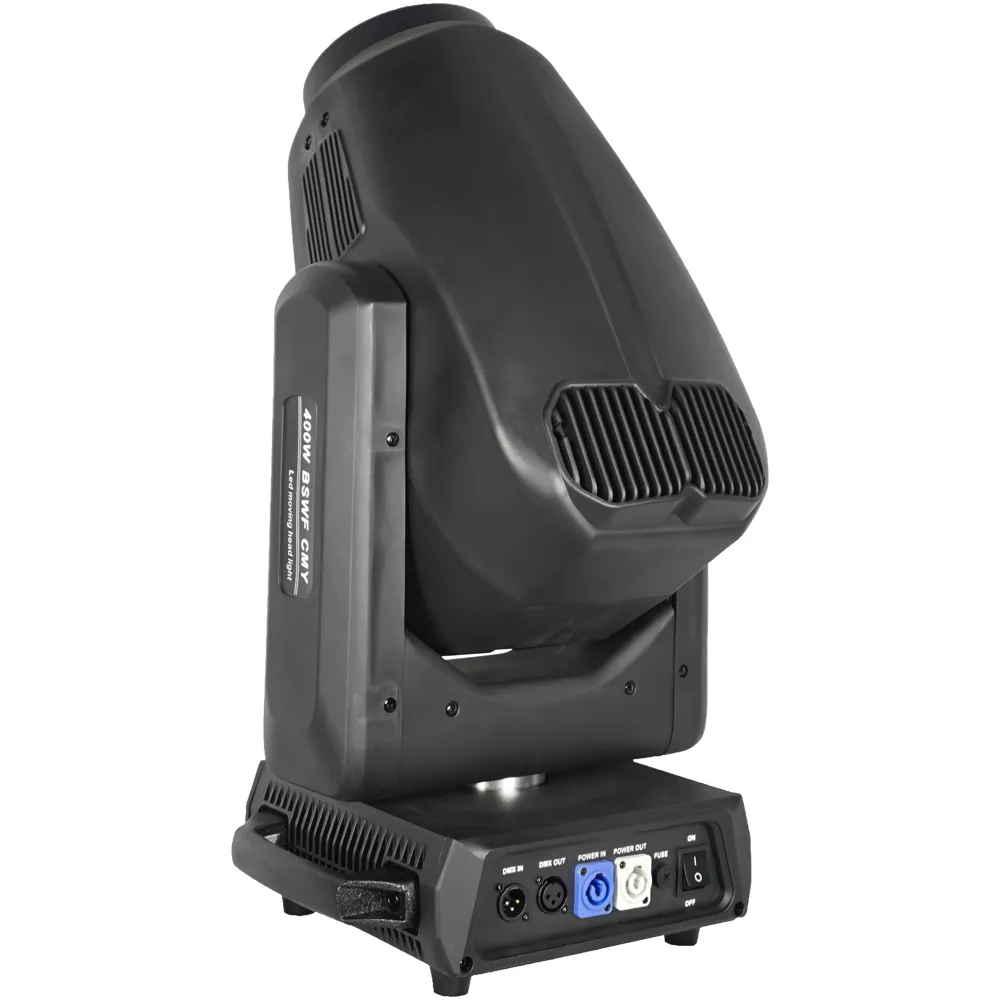
Common Pitfalls When Sourcing a Beam Spot Wash Framing Moving Light
Pitfall 1: Marketed as BSW, but without true CMY colour mixing
Many suppliers label fixtures as 3‑in‑1 BSW, yet they only include static colour wheels and no physical CMY filter assembly, making smooth gradient colour transitions impossible. Always cross‑check datasheets and confirm independent Cyan, Magenta and Yellow DMX channels exist before purchase.
Pitfall 2: Cheap alternatives only feature simple shutter plates with 4 framing blades
Numerous budget profile moving heads on the market are fitted with merely four shutter blades. These can only produce basic rectangles and cannot create diamonds, angled cuts or complex multi‑sided shapes required for theatre‑grade productions. Always verify the hardware specification: professional‑level units come with eight independent framing shutters for full beam‑shaping freedom.
Pitfall 3: Neglect rental‑grade durability and photoelectric auto‑reset
Low‑cost units missing collision auto‑correction suffer permanent position offset after minor knocks. Crew must climb trusses for manual recalibration mid‑event, creating major safety and operational risks for rental companies.
Pitfall 4: Focus purely on wattage while ignoring thermal design
400 W LED fixtures generate substantial heat. Poor thermal architecture leads to frequent thermal power reduction or complete shutdown during long‑duration commercial shows.
Pitfall 5: Non‑standard DMX channel layouts incompatible with mainstream consoles
Custom non‑standard DMX channel mapping forces lighting designers to build custom fixture profiles for every new project, drastically increasing programming workload. Stick to industry‑standard 36‑channel implementations.
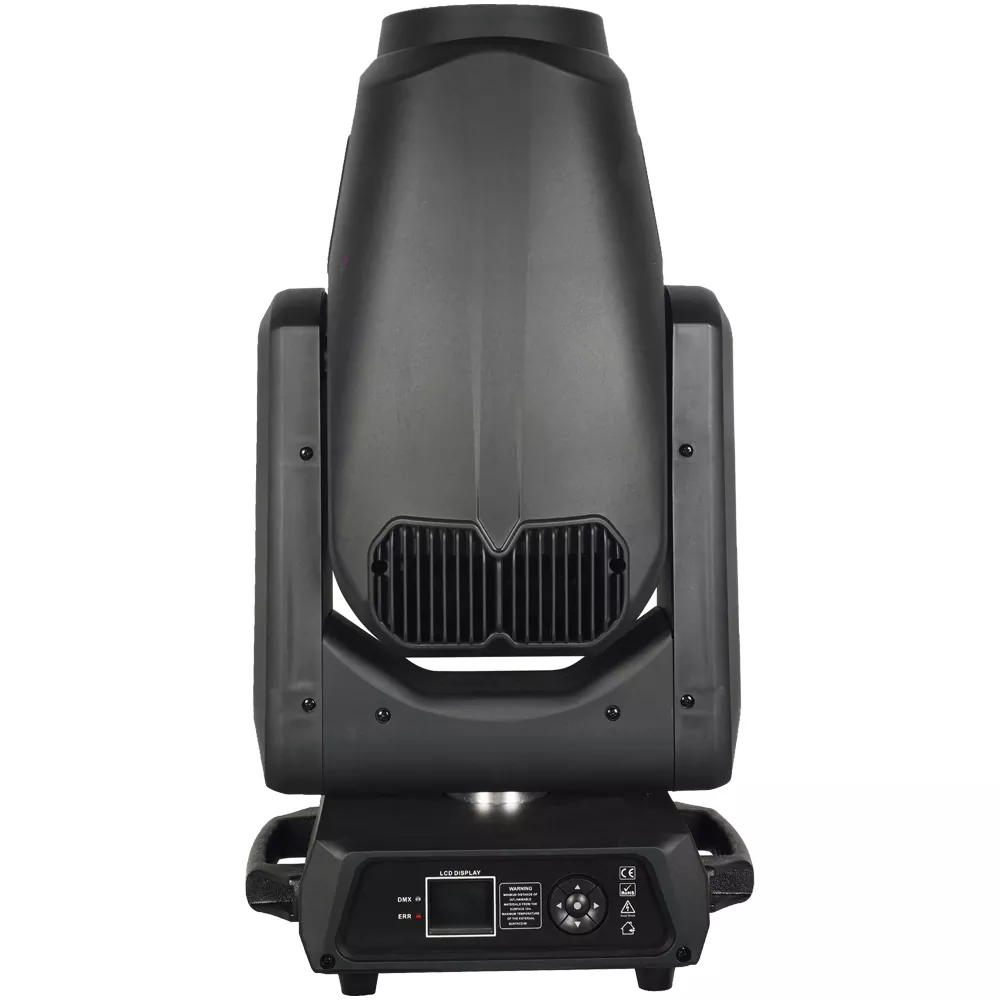
Business Scenarios Where the Mini BSW Profile Moving Head Expands Your Project Opportunities
Adding Mini BSW profile fixtures unlocks new market segments and generates more sales leads:
- Theatre & studio integration: Eight shutter blades deliver precise beam shaping, while CMY mixing meets strict standards for theatrical performance and television studio colour fidelity.
- Livehouse, music festivals and nightclub entertainment: Powerful beam output paired with soft frost wash modes allows one fixture to handle key lighting and ambient atmosphere.
- Premium corporate events & product launches: Framing shutters precisely illuminate logos and designated zones for creative stage composition and area isolation.
- Wedding & banquet rental applications: Smooth CMY wash colouring plus framing‑shaped spotlights for ceremonial zones. Replace multiple conventional moving heads and reduce total fixture count on‑site.
- Multi‑purpose auditoriums and small cultural‑tourism theatre retrofits: Achieve sophisticated lighting plots with fewer fixtures, lowering total capital expenditure for end‑clients.
Rental Fixture Maintenance Tips to Maximize Service Life
Rental units cycle between jobs constantly. Proper maintenance lowers repair frequency and long‑term operating costs.
- Power off before servicing: Always disconnect mains power for cleaning and inspection. Clean internal and external lens surfaces weekly, as dust build‑up drastically reduces light output. Keep cooling fans free of dust — clogged fans are the top cause of thermal overheating.
- Quarterly professional electrical inspection: Have certified electricians inspect terminals and power cables every three months to spot cable wear and ageing connections.
- Avoid power‑on immediately after large temperature shifts: Dew condensation forms inside fixtures after cold transit. Allow units to reach ambient room temperature before power‑on to prevent water‑related damage to optics and circuit boards.
- Rigging safety protocol: Always use safety cables as secondary fall protection alongside clamps. Ensure mounting points support at least ten times the fixture weight.
- Storage & transport: House fixtures in heavy‑duty flight cases. Store in dry conditions. Minimise rough transit shocks to protect precision framing shutters and internal motors.
Frequently Asked Procurement Questions
Q1: What advantages does the Mini BSW profile offer versus large‑format profile moving heads?
A: Weighing around 17.5 kg, the mini variant can be rigged by one person, cutting flight‑case, shipping and labour expenses. Despite its compact footprint, it retains full professional‑grade features including CMY mixing, 8‑blade framing and dual prisms. It offers maximum flexibility for rental companies handling projects of all sizes and is ideal for portfolio expansion. Larger profile units are best suited for fixed permanent theatre installations, yet they come with much higher rental logistics overhead.
Q2: What differentiates a CMY color mixing LED framing moving light from standard RGB wash lights?
A: RGB systems rely directly on red‑green‑blue LED emitters and struggle to produce high‑quality whites and consistent colour saturation. CMY uses physical subtractive filter mixing combined with CTO correction. It delivers ultra‑smooth colour transitions and cleaner whites, making it better suited for theatre and broadcast‑critical environments.
Q3: Can IP20‑rated fixtures work for outdoor events?
A: IP20 is intended for indoor or fully‑covered semi‑outdoor locations only. These units cannot withstand direct rain exposure. For uncovered outdoor productions, select IP65‑rated lighting fixtures.
Q4: Is the 36‑channel mode sufficient for rental workflows?
A: The 36‑channel layout grants full access to framing, prism, gobo and CMY functions. It follows widely accepted industry standards and works seamlessly with major lighting consoles for most commercial and theatre productions.
B2B Call‑to‑Action
If you operate a stage‑rental business, work as a lighting designer, or serve as an event system integrator and plan to add reliable LED framing moving head light units to expand your product portfolio, this Mini BSW Profile Moving‑Head Light delivers four‑in‑one Beam‑スポット‑洗う‑Framing capability. Equipped with full CMY seamless colour mixing and 8‑blade framing shutters, it is engineered for heavy‑duty rental cycles.
Contact us today to request full specification documents, lux photometric reports, demo unit trials and volume‑based wholesale pricing. OEM customisation is available. Partner with us for dependable lighting hardware and win more high‑value production and integration contracts.