Chinese solar panel manufacturer

Studio Light: Ultimate Guide to Professional Film & Broadcast Studio Lighting
High-quality studio light systems form the backbone of every professional visual production, from Hollywood film shoots and live broadcast programs to commercial video recording, stage events, and permanent photography studio setups. Reliable professional film lighting and broadcast studio lighting solutions determine the overall visual tone, color accuracy, depth, and clarity of footage, directly impacting production quality and audience viewing experience. For lighting rental companies, project contractors, studio operators, and film production teams, choosing the right studio light fixtures is critical to delivering consistent, high-end results across diverse shooting and event scenarios. This comprehensive pillar page covers all core types of professional studio lights, key selection parameters, installation guidelines, maintenance tips, and common FAQs to help industry practitioners make data-driven lighting decisions.

1. What Is Studio Light & Core Applications of Professional Studio Lighting
A studio light is a specialized artificial lighting fixture designed to deliver stable, adjustable, and high-color-accuracy illumination for visual creation and live event scenarios. Unlike consumer-grade lighting tools, professional studio lights feature precise brightness control, adjustable color temperature, high color rendering index, flicker-free performance, and durable industrial-grade construction, meeting the rigorous demands of long-hour shooting, high-definition recording, and live broadcasting.
Professional film lighting is tailored for movie, TV drama, and commercial film production, requiring layered light distribution, soft shadow transition, and human skin tone restoration to create cinematic visual effects. Broadcast studio lighting, on the other hand, focuses on uniform, flicker-free, and low-glare illumination for live news, talk shows, live streaming broadcasts, and television programs, ensuring stable image output under high-definition camera capture.
Core target users and application scenarios cover all industry-related clients: professional photography and video studios, film and television production teams, stage event contractors, lighting rental enterprises, studio engineering integration merchants, and television station broadcast departments. Whether for fixed studio construction, temporary event lighting rental, or large-scale film and television project shooting, customized studio light combinations can meet differentiated scene demands.

2. 6 Core Types of Professional Studio Light Fixtures
Professional studio lighting systems consist of six mainstream core fixtures, each with unique optical characteristics, functional advantages, and applicable scenarios. Each product serves an irreplaceable role in building a complete broadcast studio lighting and professional film lighting solution. Below is a detailed introduction to each studio light type, with reserved internal link anchors for corresponding product blog pages.
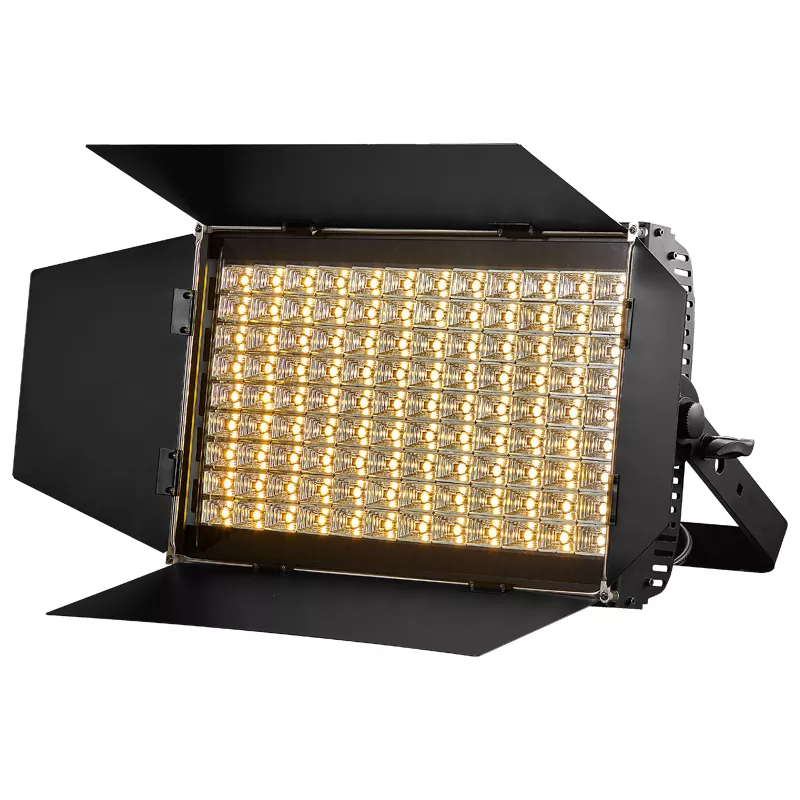
2.1 LED Flood Light
LED Flood Light is a wide-angle, high-uniformity general lighting studio light, widely used for base ambient lighting and large-area scene filling in professional studios and film production. This type of studio light features a super-wide beam angle ranging from 90° to 120°, capable of covering a large shooting area with soft and even light, eliminating obvious dark corners and uneven local brightness.
Equipped with high-quality LED lamp beads, the LED flood light achieves a high CRI (Color Rendering Index) of over 95, which can truly restore the color of characters, costumes, and scene props. It supports stepless dimming and color temperature adjustment (3200K warm white to 5600K cool white), adapting to indoor fixed studio shooting, outdoor auxiliary filling light, stage background lighting, and live broadcast room base lighting. For lighting rental businesses and engineering contractors, LED flood lights are cost-effective universal fixtures with high utilization rate and low failure rate, suitable for mass deployment in conventional studio and event projects.
2.2 LED Fresnel Spot Light
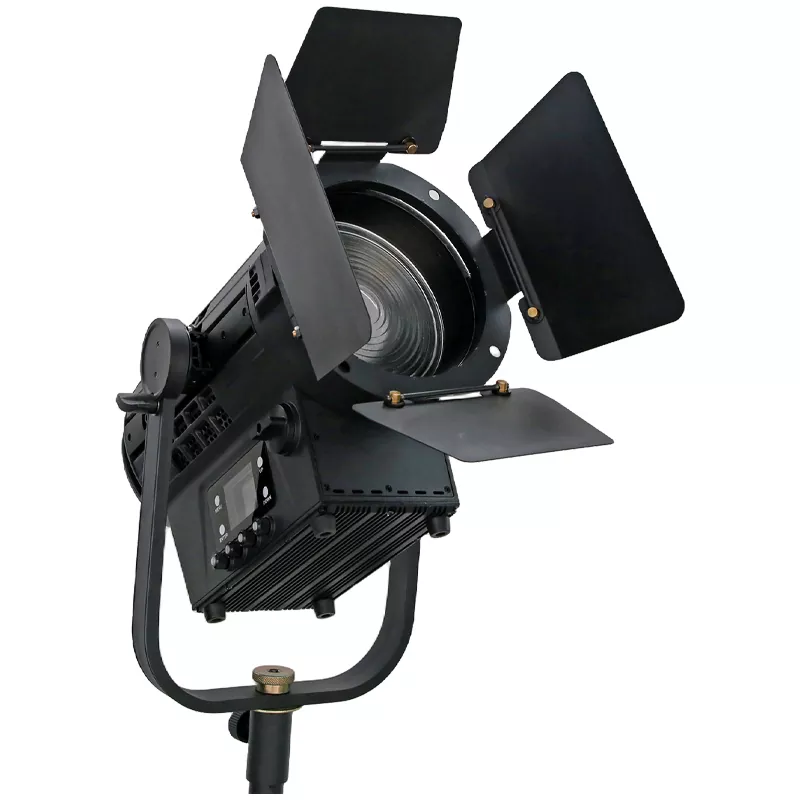
LED Fresnel Spot Light is a classic focusing studio light dedicated to professional film lighting, named after its unique Fresnel lens optical structure. Different from flood lights, this fixture supports continuous beam angle adjustment (15° to 55°), realizing flexible switching from concentrated spotlight effect to soft floodlight effect, which is the core equipment for layered light creation in film and television shooting.
The Fresnel lens design ensures high light utilization rate and uniform light spot without edge blurring, enabling precise shaping of character contour light, auxiliary modeling light, and scene key light. It adopts flicker-free constant current drive technology, perfectly adapting to high-frame-rate and 4K high-definition shooting without stroboscopic shadows. With precise dimming accuracy (0-100% stepless dimming) and stable color temperature output, LED Fresnel spot lights are the preferred choice for film crews, drama studios, and high-end program recording. They support DMX512 intelligent control, convenient for unified scheduling in large-scale studio lighting systems.
2.3 LED Leko Profile Light
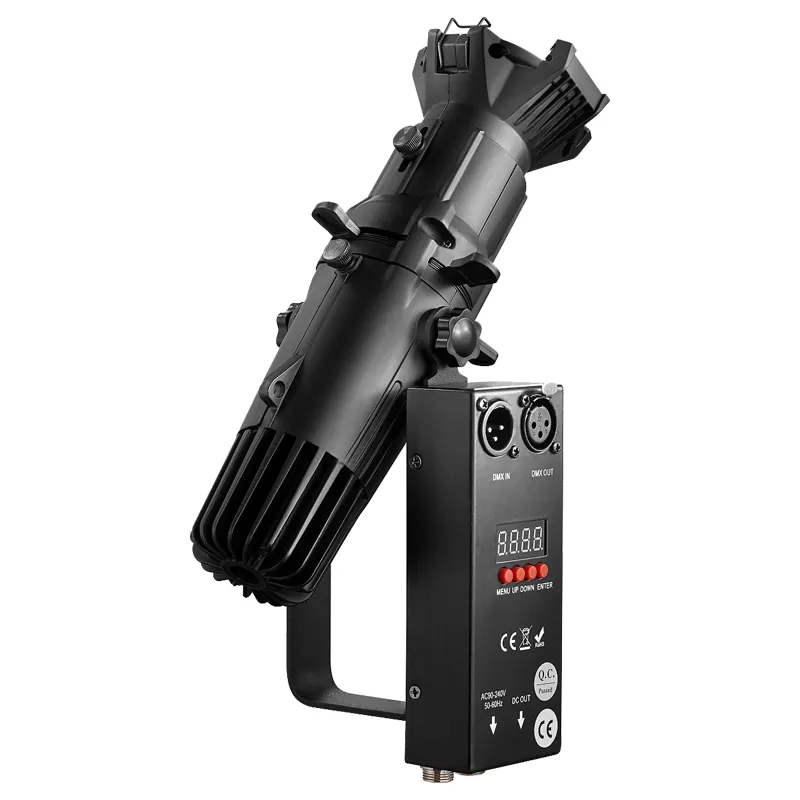
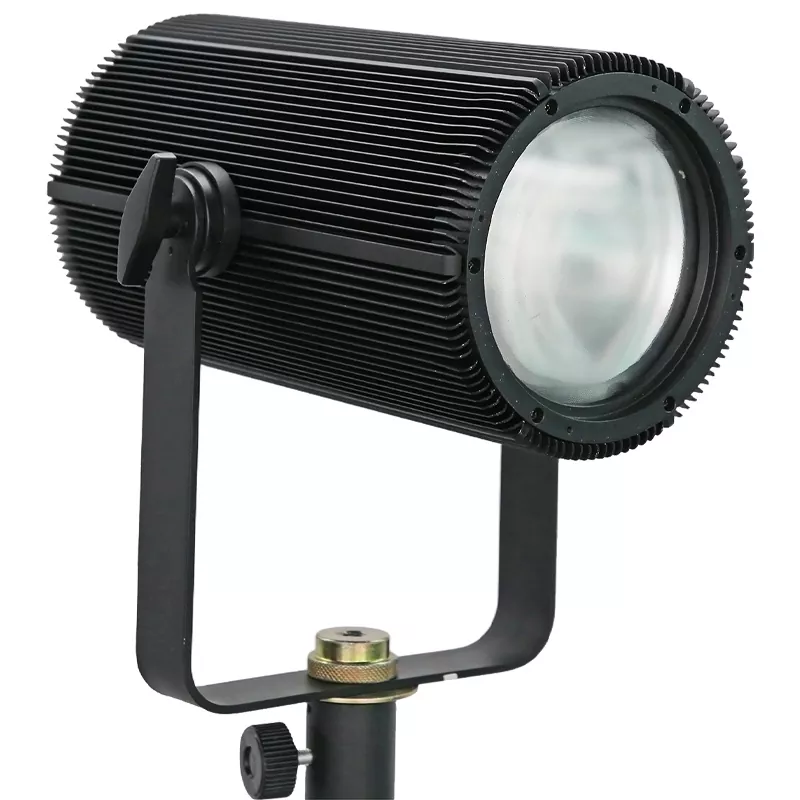
LED Leko Profile Light, also known as ellipsoidal spotlight, is a high-precision shaping studio light, focusing on accurate light spot cutting and pattern projection. As a high-end fixture in broadcast studio lighting and stage lighting systems, it is mainly used for precise local lighting, character highlighting, pattern rendering, and stage effect creation.
This studio light is equipped with adjustable aperture blades and replaceable gobos, which can cut light spots into standard circles, squares, rectangles, or custom patterns, realizing accurate light boundary control and completely avoiding stray light interference. The high-precision focusing system ensures clear and sharp light spot edges, suitable for host facial lighting in broadcast studios, character key lighting in theatrical performances, product detail shooting in commercial advertisements, and art scene rendering. With low power consumption, long service life, and high light purity, LED Leko profile lights are essential for high-precision visual production scenarios and high-end studio engineering projects.
2.4 LED Video Panel Light
LED Video Panel Light is a portable, ultra-thin surface light studio light, specially designed for mobile video shooting, live broadcast filling light, and portrait photography lighting. It features a flat panel light-emitting structure, outputting ultra-soft and uniform light with no hard shadows, effectively modifying facial skin texture and avoiding harsh light spots on the subject.
Most LED video panel lights support dual-color temperature adjustment or full-color RGBW color adjustment, with rich color modes and scene presets, which can quickly adapt to different shooting styles and scene atmospheres. The lightweight and portable design with bracket installation mode meets the mobile shooting needs of outdoor filming, short video creation, and on-site event recording. For small and medium-sized studios, individual creators, and temporary shooting teams, LED video panel lights are cost-effective and easy-to-operate studio light devices, balancing portability and lighting effect.

2.5 LED COB Blinder
LED COB Blinder is a high-brightness burst-effect studio light, taking high-power COB integrated lamp beads as the light source, with super-high luminous intensity and strong penetrating power. It is mainly used for stage atmosphere rendering, event opening and closing effects, and studio dynamic light matching, and is widely matched in large-scale performance lighting and conference opening projects.
Different from conventional soft lighting fixtures, COB blinder lights focus on strong light impact and dynamic flicker effects, supporting stroboscopic, sudden brightness change, and synchronous linkage control. With high-power output and concentrated light energy, it can create shocking visual atmosphere for stage performances, award ceremonies, and large-scale live events. The industrial-grade heat dissipation structure ensures long-term stable operation of the equipment, meeting the high-frequency use needs of rental companies and long-hour operation of large events.
2.6 House Light
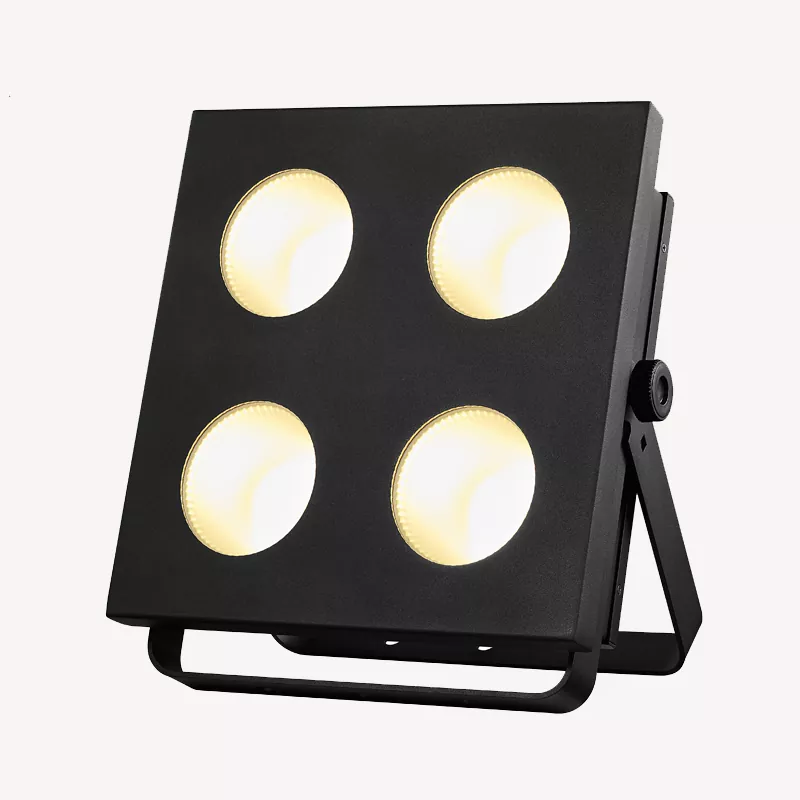
House Light is a professional studio ambient auxiliary lighting fixture, specially designed for overall scene atmosphere filling and shadow elimination in broadcast studios, film and television studios, and stage venues. As an indispensable auxiliary component of broadcast studio lighting systems, it makes up for the lighting blind spots of key light and modeling light, realizing three-dimensional and layered overall scene lighting.
House light features ultra-soft light output, low glare, and high uniformity, which will not cause light interference to camera shooting and character performance. It supports overall brightness fine-tuning and synchronous linkage with the main lighting system, effectively improving the overall brightness uniformity of the studio, reducing picture noise, and optimizing shooting picture quality. It is widely used in fixed television broadcast studios, indoor film and television shooting bases, and permanent stage venues, providing stable and comfortable basic ambient lighting for long-term shooting and program recording.
3. Key Studio Light Selection Parameters for Professional Projects
When purchasing and configuring studio light equipment for studio construction, project engineering, or rental business, core parameter indicators directly determine the final lighting effect and equipment service life. Professional clients such as engineering contractors and studio teams need to focus on the following key parameters to complete scientific model selection and scheme matching.
Color Rendering Index (CRI/TLCI): CRI is the core standard for measuring light color reduction ability. Professional professional film lighting requires CRI≥95 and TLCI≥97, which can truly restore skin tone, clothing color, and scene color, avoiding color distortion in post-production. Broadcast-level studio lights must meet high color rendering standards to ensure consistent picture color output of high-definition cameras.
Color Temperature Range: Conventional studio lights adopt 3200K-5600K dual-color temperature design, covering warm light for indoor portrait shooting and cold light for commercial and news shooting. High-end full-color fixtures support 2700K-8000K wide-range adjustment and RGBW color mixing, meeting personalized creative lighting needs of film and television creation.
Flicker-Free Performance: For high-definition and high-frame-rate shooting, studio lights must adopt constant current flicker-free drive technology to avoid screen strobing, rolling stripes, and frame loss. It is a necessary condition for professional broadcast and film shooting equipment.
Beam Angle & Dimming Accuracy: Adjustable beam angle fixtures can realize flexible switching of spotlight and floodlight; 0-100% stepless dimming with 1% fine-tuning accuracy ensures smooth light transition and no sudden brightness change, suitable for layered light creation.
Control Mode: Professional studio lights support DMX512 wired control, wireless DMX control, and remote APP control, realizing synchronous linkage and programmed scene switching of multiple lights, improving the efficiency of large studio lighting layout.
Heat Dissipation & Durability: Long-hour studio shooting requires equipment with efficient heat dissipation system and overheating protection function. Industrial-grade aluminum alloy shell and professional heat dissipation structure ensure stable operation for a long time and extend the service life of equipment, reducing the maintenance cost of rental and engineering projects.

4. Professional Studio Light Installation & Maintenance Guidelines
Standardized installation and daily maintenance are key to ensuring the long-term stable operation of broadcast studio lighting and professional film lighting equipment, helping rental merchants and engineering teams reduce failure rates, extend equipment life, and ensure the stability of on-site shooting and event lighting.
4.1 Standard Installation Steps
First, confirm the installation position according to the lighting scheme, select professional light stands, truss frames or fixed boom mounting structures to ensure stable equipment fixation and avoid shaking and displacement during use. Second, complete power connection and wiring arrangement, use professional power distribution equipment, avoid mixed wiring and overload power supply, and do a good job of waterproof and anti-interference protection for on-site mobile projects. Finally, complete signal debugging, connect DMX control signals, test dimming, color temperature adjustment and linkage functions, and adjust the beam angle and height of each studio light according to the scene lighting requirements to ensure uniform light distribution and reasonable layered light layout.
4.2 Daily Maintenance & Care
Regularly clean the lamp surface and lens of studio lights to avoid dust accumulation affecting light transmittance and lighting effect; use dry soft cloth for wiping, and avoid corrosive cleaning agents. Regularly check power lines, signal lines and interfaces to eliminate aging, looseness and short-circuit hidden dangers. After long-term high-intensity use, check the heat dissipation system of the equipment, clean the dust of the heat dissipation hole to ensure normal heat dissipation. For rental equipment, complete comprehensive inspection and parameter reset after each use to ensure no failure in the next use. In addition, studio lights should be stored in a dry and ventilated environment to avoid moisture and sun exposure, preventing internal circuit damage.

5. FAQ About Professional Studio Light & Lighting Solutions
Here are the most frequently asked questions from studio operators, lighting rental merchants, engineering contractors and film production teams about studio light selection, use and scheme matching, to solve common industry pain points.
Q1: What is the difference between film-grade and broadcast-grade studio lights?
Film-grade professional film lighting focuses on light layering, shadow transition and creative shaping, with higher requirements for dimming smoothness and optical precision, suitable for movie, commercial and high-end portrait shooting. Broadcast-grade broadcast studio lighting focuses on uniform and stable overall illumination, flicker-free and low-glare performance, adapting to long-term live broadcast and program recording scenarios.
Q2: How to match studio lights for a new photography studio?
Conventional studio basic configuration is based on LED flood lights for ambient filling light, matched with Fresnel spot lights for key light modeling and video panel lights for portable filling light. High-end studios can add Leko profile lights for precise shaping and house lights for auxiliary atmosphere lighting to form a complete lighting system.
Q3: Are LED studio lights suitable for long-term rental business?
Yes. Modern LED studio lights have the advantages of low power consumption, long service life, low failure rate and portable installation, with high cost performance. They are suitable for frequent disassembly, assembly and mobile use of rental projects, and can meet the lighting needs of various events and shooting scenarios.
Q4: How to avoid stroboscopic problems in studio shooting?
It is necessary to select professional flicker-free studio lights with constant current drive technology, avoid low-cost civilian lighting equipment, and match the light flicker frequency with the camera shooting frame rate to ensure stable and clear shooting pictures.
Q5: What parameters should be prioritized for engineering studio lighting projects?
Project engineering needs to prioritize CRI color rendering index, flicker-free performance, control compatibility and equipment durability, ensuring that the lighting system meets long-term stable operation requirements and adapts to multi-scene shooting and program production needs.
6. Custom Studio Lighting Solutions & Project Inquiry
Whether you need single studio light fixture procurement, full set of professional film lighting equipment matching, or overall broadcast studio lighting engineering scheme design, we provide one-stop professional solutions for lighting rental companies, engineering contractors, film and television teams, and studio studios.
We support customized configuration of different power, parameters and functional studio lights, provide professional scheme design, installation guidance, after-sales maintenance and technical training services, helping customers reduce project costs and improve lighting production efficiency. If you have studio lighting equipment procurement, project transformation, or scheme customization needs, please feel free to contact our professional technical team to get a tailored lighting solution and free quotation.