B2B Stage Lighting Manufacturer | Custom & Rental Stage Light Solutions

IP65 Waterproof Moving‑Head Lights: MN380, P760, P860, P1930, P1940, P3740 Specs & Practical Review

Why Prioritize IP65 Waterproof Moving Head Lights for Outdoor Stage Projects
Lighting rental companies, cultural‑tourism engineering integrators and event general contractors frequently work on outdoor music festivals, waterfront live‑shows, open‑air press conferences, outdoor weddings and outdoor bar permanent lighting projects. They all face one common challenge: outdoor conditions including rain, dew, condensation from day‑night temperature swings, coastal salt spray and heavy dust can quickly damage standard IP20 indoor moving‑head lights.
Many buyers make costly mistakes by deploying indoor‑only moving‑head lights for outdoor events. Unexpected fixture failures mid‑show may lead to on‑site emergency repairs, client compensation and high repair expenses. Meanwhile, IP65‑labelled fixtures on the market vary greatly in real‑world quality. Many low‑cost units only apply sealant to outer shells, leaving rotating yokes and signal connectors unsealed. Even without heavy rainfall, internal condensation caused by temperature shifts can result in lens fogging and short‑circuited circuit boards.
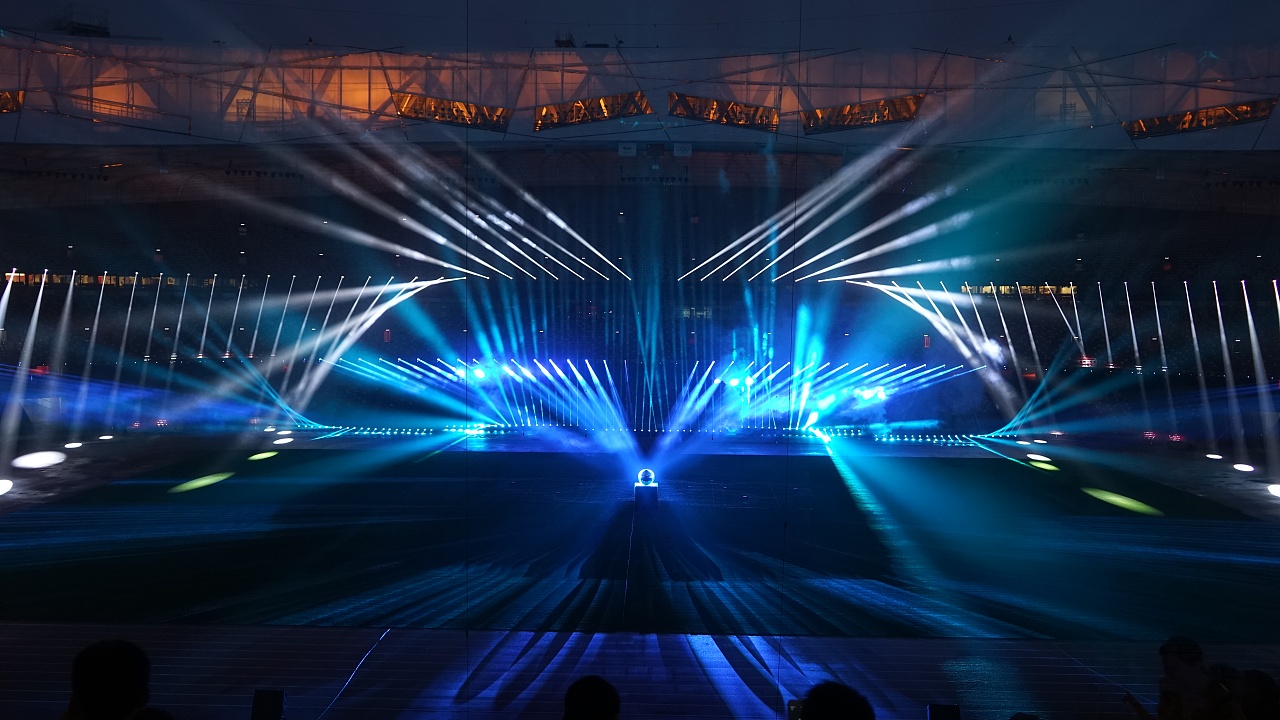
Definition of IP65 rating: Dust‑tight and protected against low‑pressure water jets. It does NOT mean submersible under pooled water. High‑quality IP65 moving‑head lights implement sealing on lamp housing, yoke joints, display windows, power and DMX ports. Premium models add pressure‑equalizing breather valves to mitigate internal condensation.
Product Positioning & Suitable Business Scenarios for Full‑Range IP65 Waterproof Moving‑Head Lights
This product cluster includes six IP65 outdoor moving‑head fixtures: MN waterproof beam light, P760, P860, P1930, P1940 and P3740. The portfolio covers lightweight beam fixtures, medium‑power bee‑eye units, high‑power bee‑eye lights and high‑pixel matrix bee‑eye fixtures. It supports project scales ranging from small outdoor roadshows up to large‑scale music festivals and large‑scale cultural‑tourism light shows. This pillar page only provides business‑oriented summaries. Refer to corresponding child pages for complete original‑manual specifications.
MN380 Waterproof Beam Moving‑Head Light
The MN380 waterproof beam moving‑head light is a lightweight outdoor beam fixture. Its compact body reduces truss load pressure for fast setup and transportation. It integrates complete colour wheel, gobo wheel, dual prisms and frost effects. Multiple DMX channel modes are available with RDM remote address‑setting support. It comes with a TFT colour display and supports X/Y axis inversion and auto‑correction for motor step‑loss.
✅ Suitable scenarios: Small‑scale outdoor roadshows, permanent installation for outdoor bars, small‑spot cultural‑tourism lighting, supplementary beam effects for outdoor weddings ⚠️ Limitation: Limited beam power, not designed for ultra‑long‑distance projection at large music festivals
P760 IP65 Waterproof Moving‑Head Light
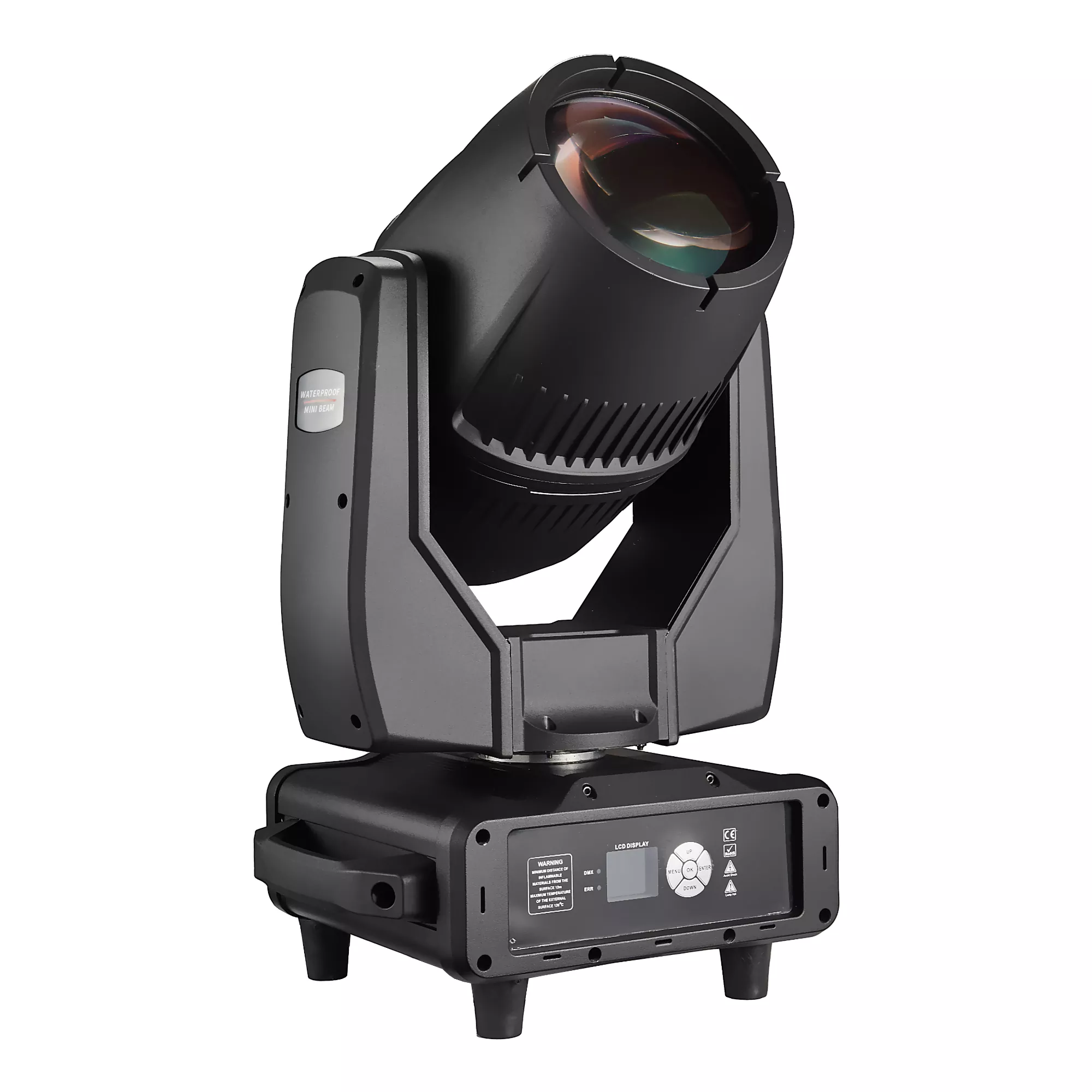
The P760 is a medium‑and‑small‑power multi‑functional IP65 bee‑eye moving‑head light, delivering both beam and wash effects with moderate total power and compact weight. It supports motorised zoom, multi‑mode strobe and multiple selectable DMX channels. It complies with DMX512 and RDM protocols, equipped with a bilingual LCD menu, intelligent temperature‑controlled fans and overheat protection.
✅ Suitable scenarios: Medium‑small outdoor live events, outdoor weddings, medium‑small cultural‑tourism lighting spots, outdoor pop‑up activities ⚠️ Limitation: Limited maximum lux output; not ideal for long‑distance large‑scale outdoor performances

P860 IP65 Waterproof Moving‑Head Light
Building upon the P760 platform, the P860 is a medium‑power IP65 bee‑eye moving‑head light with upgraded optics for wider zoom range and higher light output. It retains multi‑channel modes and pixel‑control capability. Die‑cast aluminium housing plus UV‑resistant flame‑retardant plastic and enhanced sealing gaskets deliver improved durability for dusty outdoor environments.
✅ Suitable scenarios: Medium‑scale outdoor performances, waterfront commercial events, auxiliary positions for outdoor music festivals, permanent outdoor cultural‑tourism projects ⚠️ Limitation: Fewer pixel‑control channels compared to the high‑power GY‑P3740 model

P1930 IP65 Waterproof Moving‑Head Light
The P1930 is a classic lightweight 19‑LED‑chip IP65 bee‑eye fixture with outer‑ring auxiliary halo lighting. Its low weight eases handling and truss‑mounting. Multiple DMX channel sets are provided: low‑channel modes for fast rental setup, while high‑channel modes enable individual pixel‑by‑pixel LED control. It supports sound‑active auto‑run and RDM remote management.
✅ Suitable scenarios: Outdoor weddings, medium‑small outdoor events, outdoor bar lighting, medium‑small cultural‑tourism lighting spots ⚠️ Limitation: Shorter projection distance versus high‑power 7‑series bee‑eye fixtures

P1940 IP65 Waterproof Moving‑Head Light
The P1940 is an upgraded 19‑chip IP65 bee‑eye moving‑head light with optimised light sources and optical lenses for improved brightness and colour uniformity. Outer‑ring halo performance is enhanced. Expanded DMX channel groups enable finer pixel‑animation effects, and sealing structures are optimised for better salt‑spray resistance in coastal sites.
✅ Suitable scenarios: Outdoor weddings, medium‑size outdoor press conferences, outdoor cultural‑tourism live‑shows, regular rental‑stock fixture ⚠️ Limitation: Still medium‑light‑power grade; not used as main long‑distance beam fixture for main‑stage applications

P3740 IP65 Waterproof Moving‑Head Light
The P3740 is the flagship high‑power IP65 bee‑eye moving‑head light of this series. It features high‑power main LEDs plus outer‑ring halo lights, wide‑range motorised zoom, high lux output, multi‑channel individual pixel‑control, Art‑Net network‑lighting protocol and UPS power‑failure protection. Reinforced mechanical construction supports long‑duration continuous outdoor‑site operation.
✅ Suitable scenarios: Medium‑scale outdoor music festivals, large‑scale cultural‑tourism light shows, large open‑air brand launch events, waterfront large‑scale commercial performances, primary rental‑stock fixture for large projects ⚠️ Limitation: Relatively heavy weight; truss load‑capacity must be verified before rigging; shock‑proof flight‑cases are mandatory for long‑distance transportation

Critical Buying Pain‑Points & Selection Criteria for B2B Buyers of IP65 Waterproof Moving‑Head Lights
From the perspective of lighting rental firms and engineering integrators, procurement success depends on avoiding on‑site failures, lowering repair rates and cutting after‑sales costs — rather than merely comparing datasheet figures. Below are six widely‑reported buyer concerns and corresponding selection‑checklist guidance.
Pain‑Point 1: Marked IP65 rating, yet lens fogging or internal damage occurs outdoors
Many customers report fixtures labelled IP65 develop internal lens condensation or even burnt circuit boards without heavy rainfall. Cheap products often only seal outer shells, leaving yoke joints, display windows and power / DMX connectors unsealed. Temperature‑cycle‑induced internal air‑humidity exchange creates condensation inside the fixture housing even without rainwater intrusion.
✅ Selection Checklist
- Require full‑unit IP65 protection covering lamp head, rotating yoke and connection ports, not only outer casing.
- Prioritise fixtures fitted with pressure‑equalising breather valves to mitigate condensation from internal‑external temperature differences.
- Require dedicated waterproof power and signal connectors; bare exposed XLR connectors are unsuitable for long‑term outdoor deployment.
- Remember IP65 protects against water jets only, NOT submersion. Elevate fixtures at low‑lying water‑prone locations. For coastal salt‑spray environments, clean sealing gaskets after each use as salt accelerates gasket ageing.

Pain‑Point 2: Rapid corrosion and high failure rates in coastal / dusty festival environments
Airborne dust and sea‑salt particles common at festivals and waterfront cultural‑tourism venues degrade ordinary sealing gaskets and corrode metal fasteners, leading to signal drop‑outs and mechanical jamming.
✅ Selection Checklist Select units with die‑cast aluminium housings plus UV‑resistant flame‑retardant engineering plastic; anti‑rust treated fasteners and triple‑coated circuit boards. After coastal‑site deployment, always clean salt residues from housings and connector gaskets.

Pain‑Point 3: Unstable outdoor DMX signals causing fixture mis‑behaviour
Long DMX wiring runs combined with electromagnetic interference from generators and high‑power loudspeakers in open‑air venues frequently trigger random fixture pan/tilt movements and colour corruption, creating performance‑failure risks.
✅ Practical Solutions
- Always use shielded DMX cables. Fit a 120 Ω terminator resistor on the DMX‑OUT port of the LAST fixture in the signal chain to eliminate signal reflections.
- Route DMX cables away from high‑voltage power cables; avoid parallel laying.
- When using RDM remote‑device‑management, deploy bi‑directional DMX amplifiers only. One‑way amplifiers block RDM return feedback and prevent console fixture discovery.
- For major live events, wireless DMX may only serve as backup; primary signal path must remain wired.

Pain‑Point 4: Mechanical damage and step‑loss after frequent rental‑cycle transportation
Rental fixtures endure repeated flight‑case transit, rigging and de‑rigging. Pan/tilt motors, gear trains and zoom assemblies are wearing‑prone components. Shock‑induced motor step‑loss forces lighting technicians into time‑consuming manual re‑calibration before every show.
✅ Selection Checklist Prioritise fixtures equipped with opto‑coupler encoder auto step‑loss correction for automatic position recovery after mis‑alignment. Confirm hardware includes standard Omega‑bracket mounting points plus independent safety‑cable attachment lugs. Never attach safety cables to fixture carry handles — this is a well‑known industry safety hazard. Always use shock‑proof flight‑cases for rental‑cycle transport.

Pain‑Point 5: Multiple DMX channel modes cause heavy on‑site programming workload
All six IP65 fixture models in this portfolio offer multi‑mode DMX channel settings. Some manufacturers deliver poorly‑organised channel mapping without official channel tables, preventing import into fixture libraries for BATON, King‑Kong, Titan, MA lighting consoles and raising on‑site debugging labour costs.
✅ Selection Checklist Confirm suppliers supply complete official DMX‑channel documentation. Use low‑channel modes for fast rental‑show programming; high‑channel modes for pixel‑effect cultural‑tourism programming. Verify compatibility with mainstream lighting‑console fixture libraries.

Pain‑Point 6: Unexpected lamp cut‑off triggered by over‑heating during hot outdoor summer shows
Poor‑thermal‑design fixtures activate overheat protection and cut light output mid‑performance under high open‑air ambient temperatures.
✅ Selection Checklist Look for intelligent temperature‑controlled variable‑speed fans with power‑derating overheat protection (instead of hard lamp shut‑down).

IP65 Waterproof Moving‑Head Lights Rigging, Power‑On & Wiring Best Practices
These general specifications apply to all six fixture models, for both temporary rental deployments and permanent cultural‑tourism installations. Improper operation will cause equipment damage and safety hazards.
- Rigging Safety Rules Truss hanging‑point load capacity must reach at least 10 × fixture net‑weight. Mount with Omega brackets and M10 locking screws. Fasten independent safety steel‑cables to dedicated base lugs — never onto carry handles. Maintain minimum 0.5 m clearance from flammable materials. Do NOT stand directly underneath hanging fixtures during mounting, servicing or removal.
- Condensation prevention before power‑up Never power‑on fixtures immediately after cold‑truck delivery to hot‑humid outdoor venues. Allow fixtures to equalise to ambient temperature so internal condensation dissipates before power‑application. Power‑on sequence: Power on lighting console first → power‑on fixtures. Power‑off sequence: Power‑off all fixtures first → shut‑down lighting console last.
- DMX Address Configuration Assign a unique DMX start‑address to every fixture to eliminate address conflicts. Fit 120 Ω terminator at end of signal chain. Add water‑protection treatment for outdoor XLR connections.
- Menu Basic Settings Select appropriate DMX‑channel mode for your project. Configure no‑signal behaviour (hold last state / home reset). Enable pan‑tilt step‑loss correction. Use only bi‑directional amplifiers when activating RDM functions.

IP65 Waterproof Moving‑Head Lights Routine Maintenance (Rental‑Company Focus)
Always fully disconnect mains power before maintenance work. IP65 outdoor fixtures wear faster than indoor IP20 units. Sealing gaskets, fans and connectors are consumable components. Proper maintenance reduces failure rates and extends service life.
- Optical‑lens maintenance: Clean lens dust regularly as accumulated dust lowers light output. Use lint‑free soft cloth only. Alcohol or solvent cleaners will permanently destroy lens anti‑reflection coatings.
- Gasket & connector maintenance: Inspect power and DMX‑connector gaskets after every outdoor deployment. Remove salt residues after coastal‑venue use. Replace cracked / hardened gaskets immediately or IP‑rating protection will be lost.
- Thermal‑system maintenance: Periodically clear dust from cooling grilles and fans. Blocked cooling triggers overheat‑protection shutdown.
- Mechanical maintenance: Transport inside shock‑proof flight‑cases. Test pan‑tilt and zoom‑motor operation periodically.
- Firmware & electrical inspection: Back‑up fixture configurations before firmware upgrades. Conduct full electrical inspection every three months, checking for damaged power‑cables and corroded terminals.

Frequently Asked B2B Customer Questions
Q1: Can IP65‑rated moving‑head lights work in heavy rain? Can they go under water?
A: Submersion is NOT allowed. IP65 provides dust‑protection and resistance against low‑pressure water jets. Elevate fixtures in low‑lying locations. Deploy simple rain‑hoods during prolonged heavy‑rain events. For coastal‑salt‑spray applications, retract fixtures after shows; avoid permanent unsheltered outdoor storage.
Q2: Can IP65 outdoor moving‑head lights be used for indoor events?
A: Yes, IP‑ratings are backwards‑compatible for indoor use. Note: sealed thermal structures create slightly higher fan noise compared to indoor‑only fixtures; ensure adequate ventilation inside enclosed venues. Many rental fleets use IP65 fixtures for both indoor and outdoor work to simplify inventory.
Q3: How to select among MN, P760, P860, P1930, P1940, P3740 for my project?
A: Choose MN waterproof beam light for small‑spot beam‑effect requirements. Select P760 / P860 for medium‑small wash‑and‑pixel‑effect tasks. Use P1930 / P1940 for multi‑point lightweight installations. For main‑stage long‑distance high‑brightness pixel‑based cultural‑tourism light‑shows, go for flagship P3740. Rental‑house operators may stock mixed models to cover diverse‑project demands. Detailed hardware comparisons are available in respective child blog posts.
Q4: Which DMX‑channel mode should I choose?
- Low‑channel modes: Fast programming for rental run‑and‑gun shows
- Mid‑channel modes: Foreground‑background layering and halo‑special‑effects
- High‑channel modes: Individual‑LED‑pixel animation for advanced cultural‑tourism light‑show programming
Q5: Why does lens fog still occur even though the fixture is IP65‑certified?
A: In most cases fogging comes from internal condensation caused by day‑night temperature‑differences instead of rain‑water ingress. Prefer fixtures fitted with pressure‑equalising breather valves. Allow temperature equalisation before power‑on after cold‑site transportation.
Q6: Why cannot my RDM‑enabled console discover fixtures?
A: Most‑common root‑cause: one‑way DMX signal amplifiers are deployed. RDM relies on bi‑directional communication. Replace with bi‑directional amplifiers and add 120 Ω terminator resistor at signal‑chain output end.

Request Custom IP65 Outdoor Moving‑Head Light Project Support
Whether you are a lighting‑rental enterprise sourcing bulk stock, a cultural‑tourism engineering firm designing project layouts, or an event‑contractor planning outdoor‑show lighting systems. We can deliver objective fixture‑selection recommendations based on venue conditions, projection‑distance requirements, lighting‑console setup and operating‑environment constraints (normal open‑air / coastal salt‑spray site) plus your budget. Share your basic‑project information to receive fixture‑configuration suggestions.

#stagelighting #outdoorstagelighting #movingheadlight #stageequipment #eventlighting #lightingrental #stagelightingrental #eventproduction #lightingintegrator #touringlighting #culturalTourismlighting #stagefixture #liveeventtech #audiovisualsolutions