Shenzhen Showin Stage Lighting Co., Ltd

Light & Sound Weave a Frenzied Live Experience: A Deep Dive into the Stage Lighting & Special Effects at Guangzhou Music Park Festival

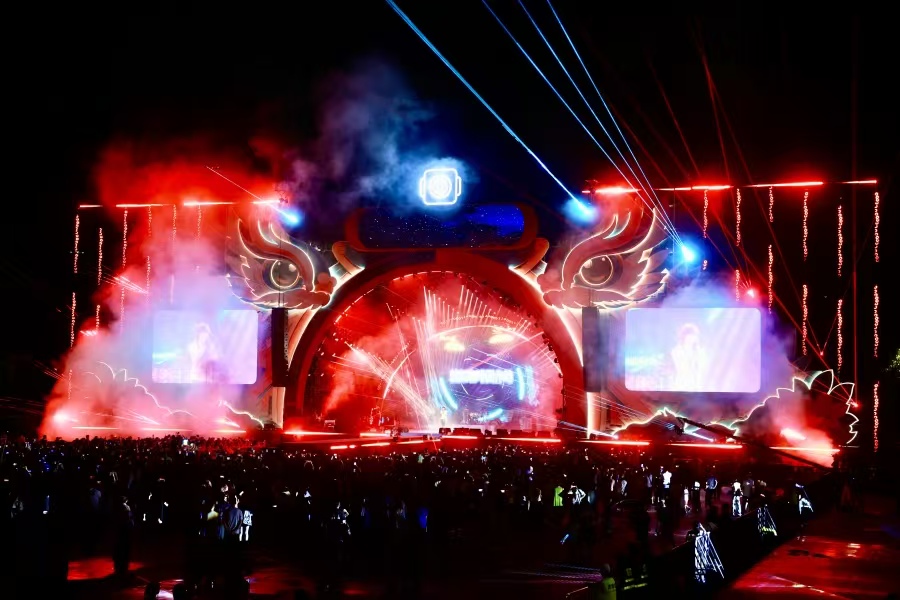
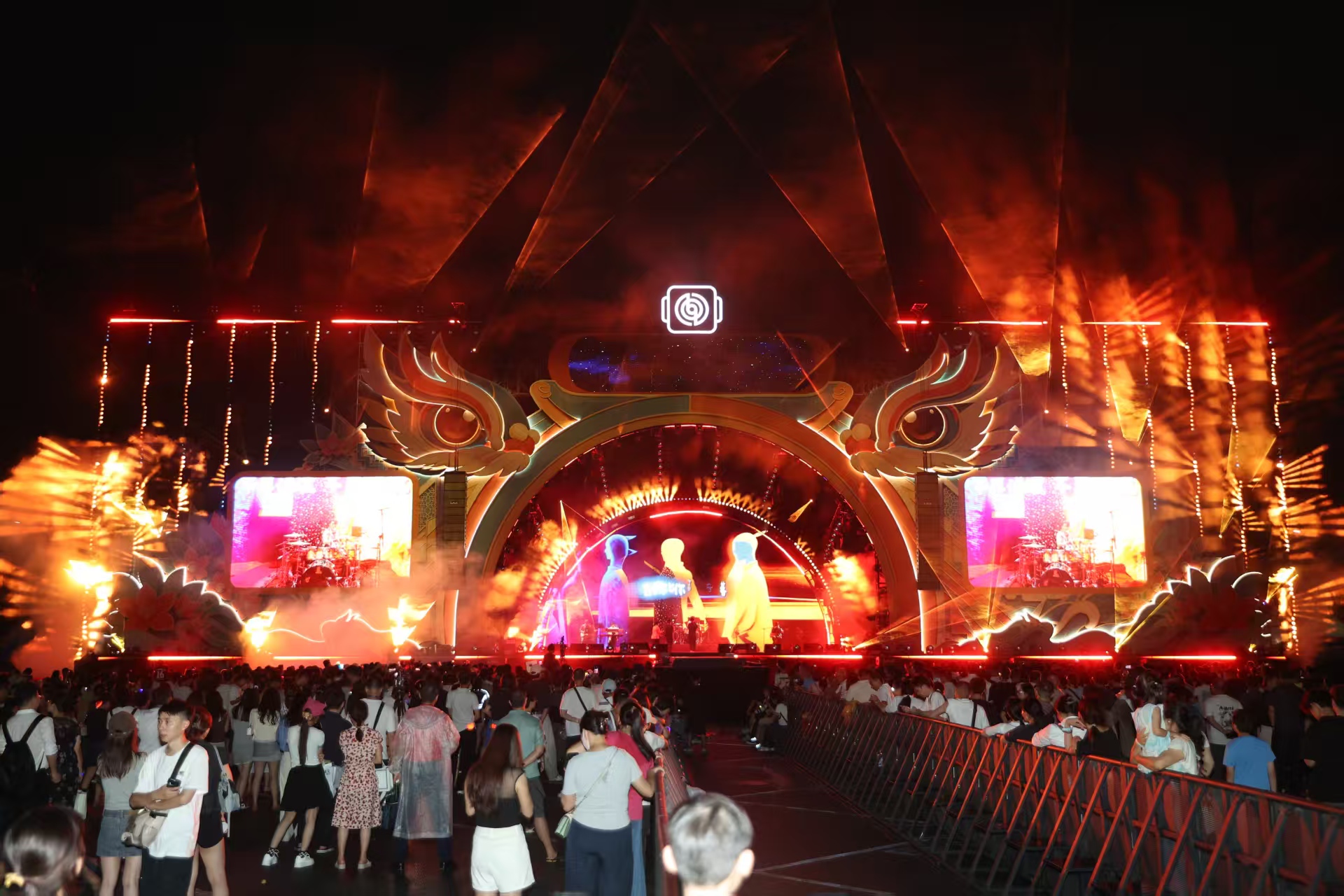
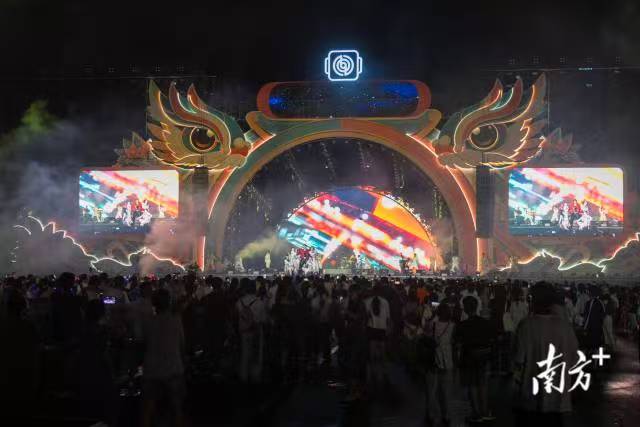
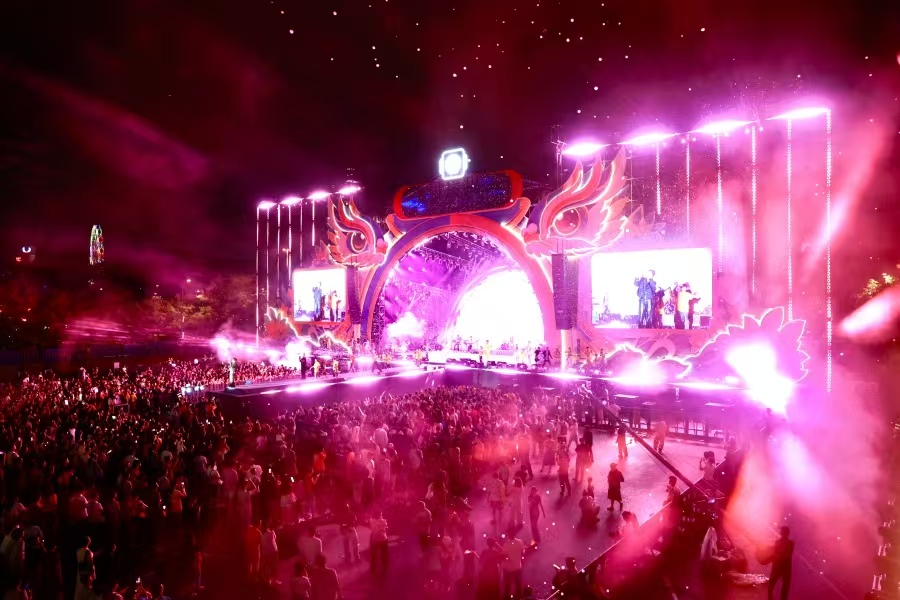
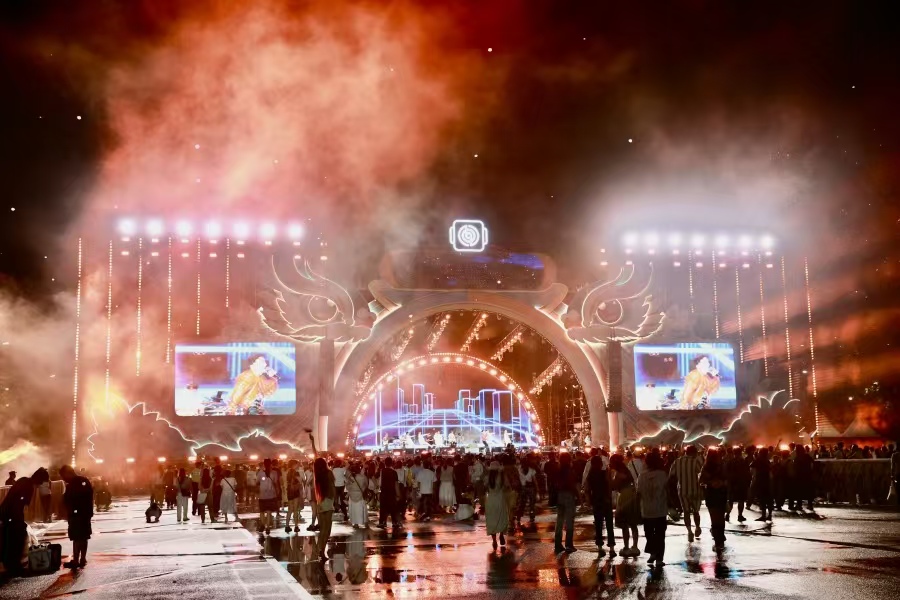
When the beat drops and the night sky over Guangzhou Music Park is torn open by layers of light and shadow, the scene is nothing short of electrifying. Jet smoke erupts across the stage, spark machines shower the air with cascading streams of brilliant light, and misty bubbles drift through the performance space, transforming the entire venue into an immersive wonderland. Every lighting fixture and effects machine works in perfect synchronicity, translating the raw emotion of the music into a visual spectacle that ignites the crowd.
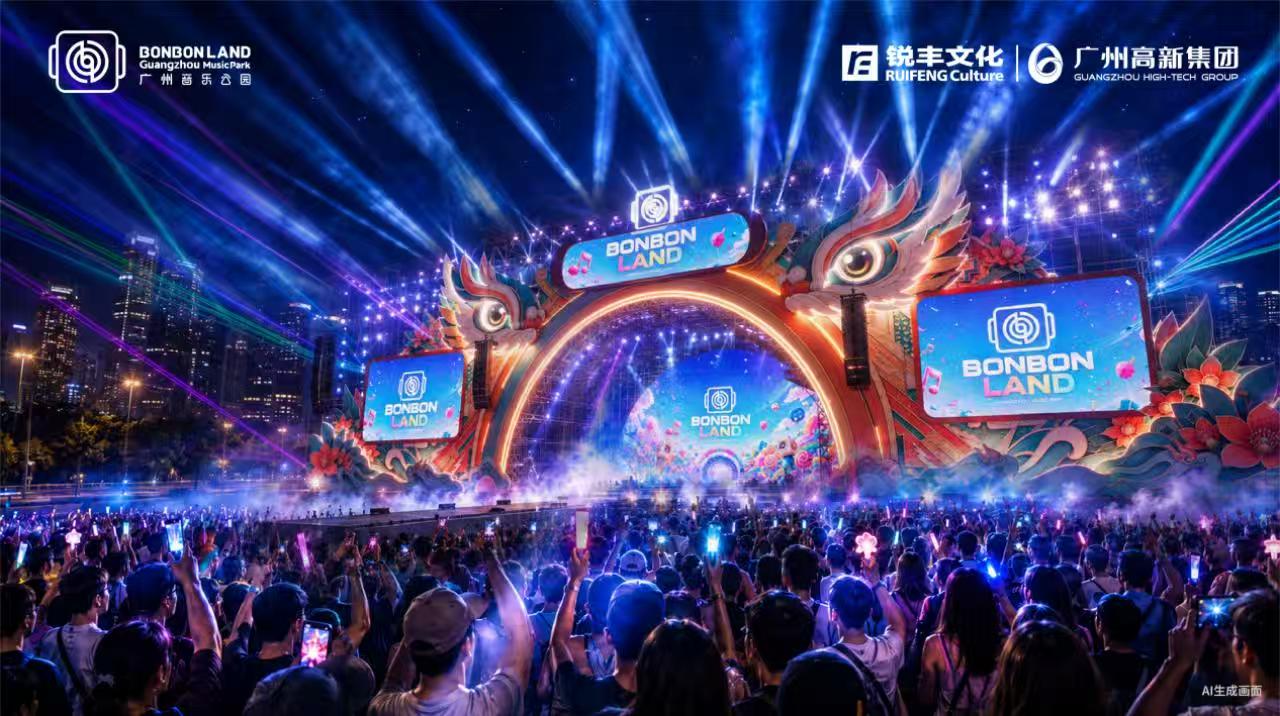
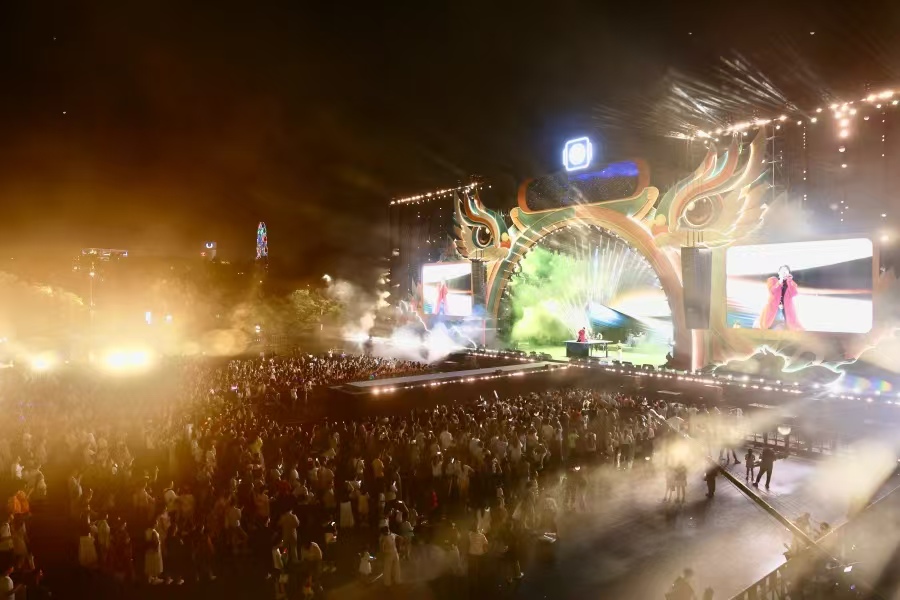
Located at the South Plaza of the Guangdong Olympic Sports Center, Guangzhou Music Park is a permanent landmark for live entertainment. It boasts a sprawling 10,000-square-meter main stage area alongside a 3,000-square-meter tented secondary stage. As a regular host to large-scale outdoor music festivals, pop music nights, and band tours, the venue faces the unique challenges of an open-air environment—extreme temperature swings between day and night, rain, dust, and significant light loss over vast open spaces. A successful show here isn’t just about the band; it’s a meticulously coordinated symphony of lighting, special effects, and control systems. The sweeping beams, shifting colors, and precisely timed effects all serve the ebb and flow of the music.
In this deep-dive analysis, we break down the entire production system at Guangzhou Music Park—from the on-site visual experience and core lighting hardware to the mechanics of the effects machines, system architecture, equipment selection pain points, and emerging industry trends. We’ll reveal exactly how each piece of equipment comes together to craft that unforgettable, immersive festival vibe.
I. The Visual Spectacle On-Site: A Sensory Feast of Light & Shadow
As dusk falls and the audience settles in, the opening notes trigger a slow build across the system. During mellow verses, broad, soft washes of color flood the stage backdrop. Low-saturation violet and blue hues gently wash over the truss structures and LED screens, while bubble machines release a delicate mist of translucent bubbles. These semi-transparent orbs drift on the evening breeze, softening the industrial edge of the stage and delivering the music’s tender emotions to the tens of thousands in the crowd.
Then comes the explosive transition.
As the chorus hits, the entire venue transforms. Jet smokers, triggered with precision by the console, sync perfectly with the kick drum. Tight, vertical white columns of smoke blast upward, reaching heights of several meters before dissipating rapidly. This short, powerful burst creates a physical punch that reinforces the heavy beat without lingering haze to obscure the visuals. Simultaneously, spark machines erupt in a cascade of brilliant silver-white safe sparks, showering the night from the stage edges and front. These showers mimic the grand spectacle of fireworks without the open flames or safety risks of traditional pyrotechnics—ideal for an urban park venue.
At the same time, dozens of outdoor moving head beam lights spin into action. Sharp, piercing shafts of light cut through the haze and bubbles, weaving a dense web across the sky. The beams twist, rotate, and shift through prisms, merging into a single column pointing skyward one moment and fanning out over the audience the next. Pranie lights cycle through reds, oranges, purples, and teals, while strobes flash in rapid sequence with the rhythm. Follow spots lock onto the performers, ensuring they remain the visual anchor amidst the chaos. Lasers project intricate animated patterns and lines overhead, amplifying the futuristic energy of the night.
From the crowd, it’s pure euphoria—arms waving, smoke rising, sparks flying, bubbles drifting. The seamless fusion of music, light, and effects creates the ultimate festival experience. Most fans only feel the “epic vibe,” rarely realizing that every blast, every spark, and every sweep of light is pre-programmed on a lighting console, with thousands of devices syncing in milliseconds. Outdoors, where wind, humidity, and temperature swings add layers of complexity, delivering this flawless performance demands equipment built to last.
II. Stage Lighting Fixtures: Categories & On-Site Logic
Given the outdoor setting, Guangzhou Music Park relies heavily on IP65-rated waterproof fixtures with die-cast aluminum housings to withstand dew, light rain, and dust over long hours. The lighting system is broadly divided into four categories: performer face lighting, beam effects, wash/color effects, and specialty fixtures.
2.1 Face Lighting & Follow Spots – The Foundation of the Visual Narrative
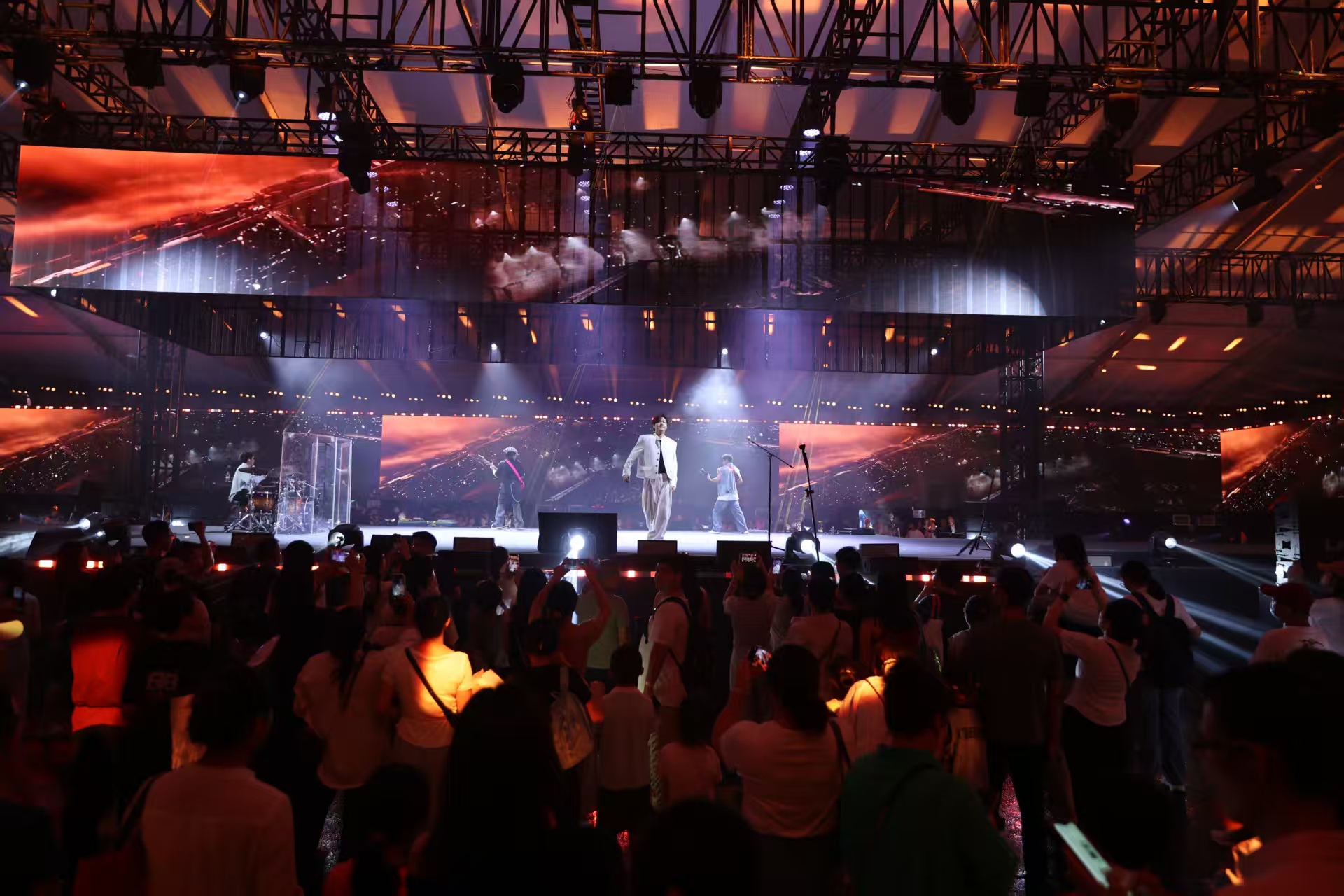
Often overlooked in favor of flashy beams, face lighting is mission-critical. Its primary job is to clearly illuminate the vocalists and band members for both the live audience and broadcast cameras. Poor front lighting ruins the show’s narrative, no matter how spectacular the effects.
Large-scale outdoor festivals rely on high-power LED profile cutting lights and high-CRI (Color Rendering Index) face lights. High CRI is non-negotiable for live streams, ensuring skin tones appear natural and true. These units are precisely angled from front trusses to evenly light performers without blinding glare.
Modern auto-follow systems have largely replaced manual operation. Equipped with visual tracking modules, they lock onto performers automatically—even during energetic stage movement—reducing labor costs and improving efficiency during fast artist turnovers on multi-act bills. While not flashy, these base lights adjust intensity to match the emotional shift of each track.
2.2 Outdoor Moving Head Belka Lights – The Night Sky Heroes
The iconic “light pillars” piercing the night sky are the work of moving head beam lights—some of the most heavily used fixtures on-site. The festival employs 380W and 470W outdoor waterproof beam units, featuring fully die-cast aluminum IP65 housings. Multi-layer coated optics ensure razor-sharp beams with minimal stray light, and precision silent motors enable smooth pan/tilt, prism switching, and pattern rotation without audible interference.
The effects are versatile: dual-prism overlays create brilliant starbursts, built-in frost filters soften beams into washes, and high-speed strobe modes deliver rhythmic punch. During peak moments, dozens of beams rotate skyward in unison, their prisms spinning to fill the night with light—made visible by the thin haze, creating the signature festival shot.
The Pain Point: The market is flooded with indoor units merely painted to look waterproof. Genuine outdoor beam fixtures require full structural sealing and redesigned thermal systems to handle condensation and temperature extremes. Cheap units suffer lens fogging, power drops, and motor stalling—a recipe for show-stopping failure.
2.3 Wash Lights & Matrix Blinder Effects – Colorizing the Canvas
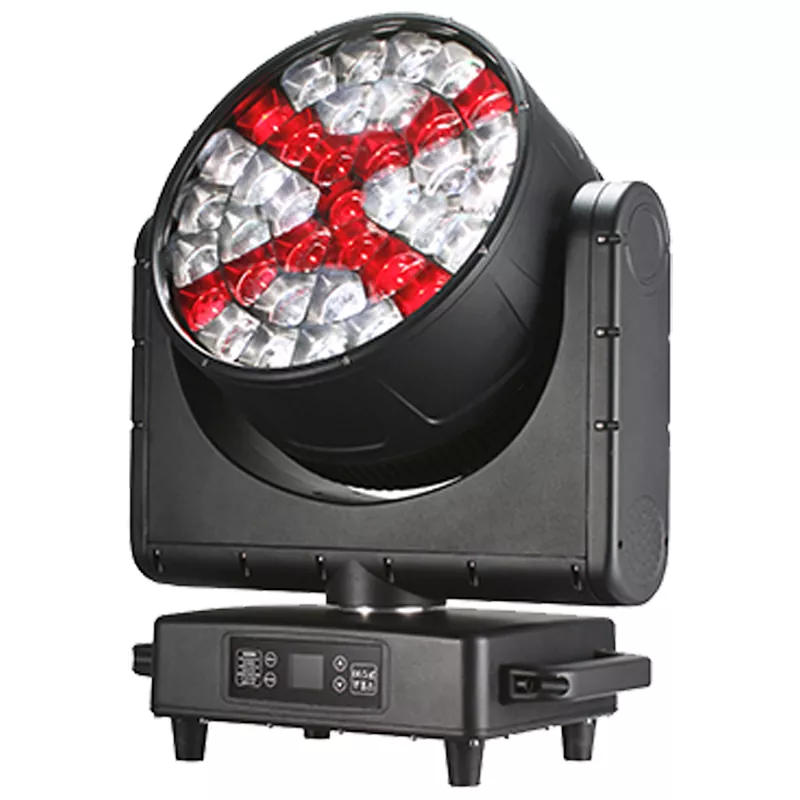
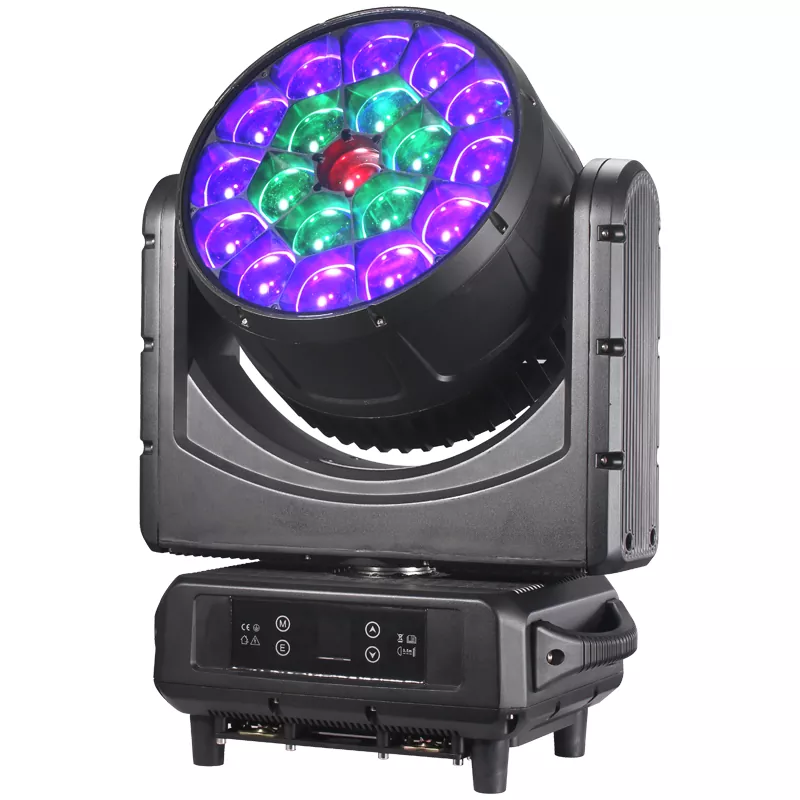
Where beam lights draw sharp lines, wash lights handle broad color coverage. The 19x40W “honeycomb” matrix wash lights have become festival staples. These IP65-rated units allow each individual LED pixel to be controlled separately, offering two modes: full-coverage uniform color washes that bathe the entire stage in hues like deep blue, purple, or warm amber; or dynamic pixel-mapping effects that create flowing, chase, and video-like patterns without relying on LED screens.
At Guangzhou Music Park, these fixtures are rigged overhead and on ground-level side trusses. For ballads, they emit soft, saturated tones; for high-energy drops, they unleash pixel animations that pulse with the beat, complementing the rigid energy of the beams.
2.4 Specialty Effect Fixtures – Lasers & Strobes
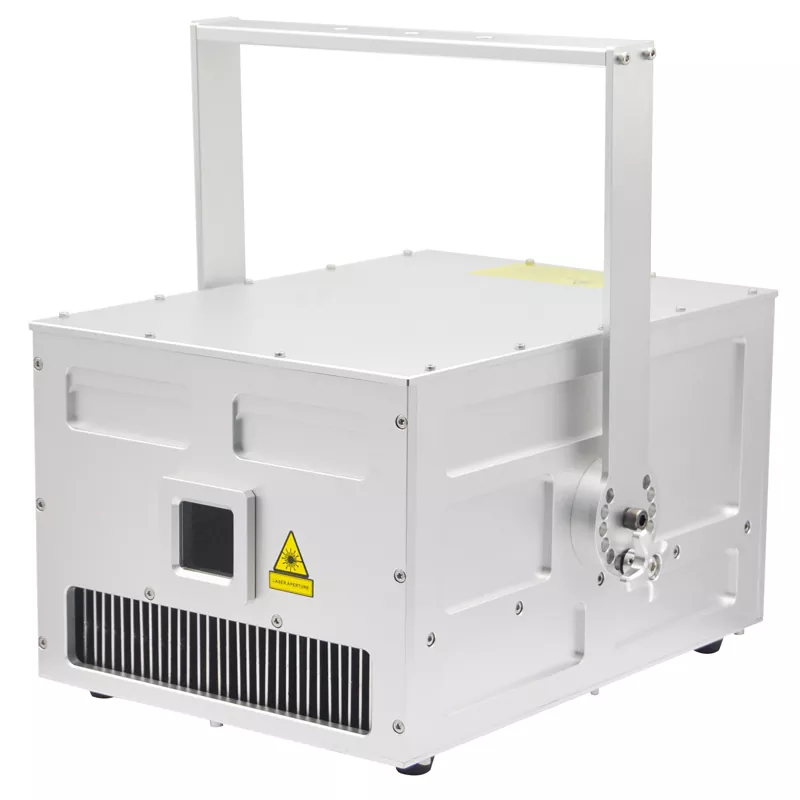
High-power outdoor full-color laser projectors (positioned at stage corners) add a sci-fi aesthetic. The 532nm green wavelength offers the best outdoor visibility, and RGB models deliver endless color options. All professional laser systems must include SPS (Scanning Protection System) to cut output instantly if the galvanometer fails, along with full IEC60825-1 safety certification.
Paired with atmospheric haze, lasers create massive airborne animations—particularly impactful during electronic sets. High-power strobes are also deployed for brief, intense bursts to amplify rhythmic impact, though usage is carefully managed to prevent photosensitive risks.
III. Special Effects Machines – The Physical Triggers of Emotional Peaks
While lighting creates the visuals, special effects machines output physical media—smoke, sparks, and bubbles—that make those light beams visible. Without a little haze, even the most powerful beam light looks like a flat spot. At Guangzhou Music Park, three types of effects machines handle the critical moments: jet smoke machines, electronic spark machines, and mist bubble machines.
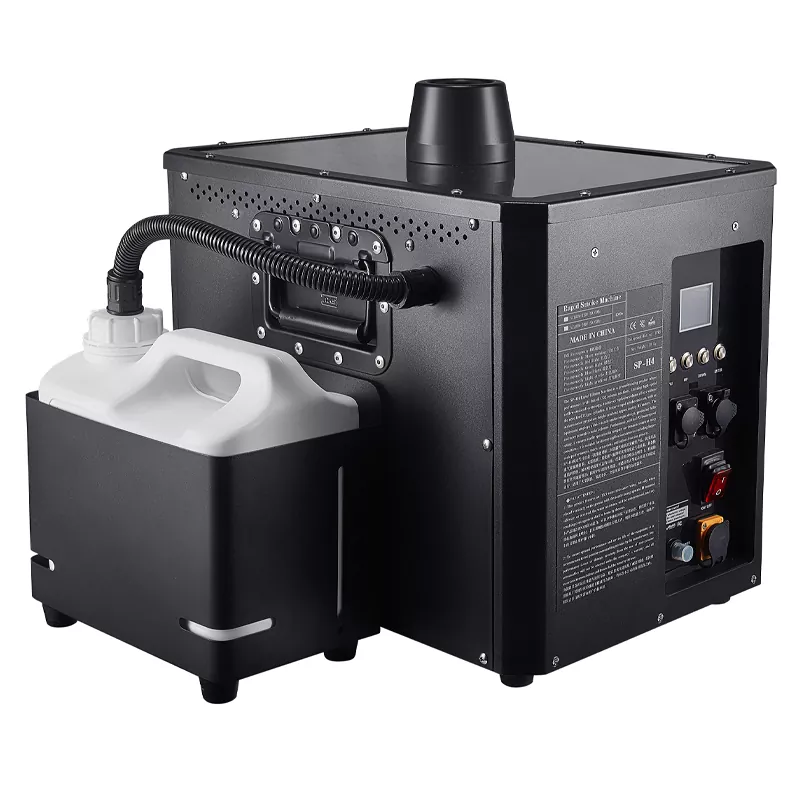
3.1 Jet Smoke Machines – The Short, Explosive Beat Enhancers
Unlike conventional foggers that fill a venue with lingering haze, LED jet smoke machines are built for instant, powerful bursts that clear quickly. The internal heating chamber superheats fluid, and high-pressure air propels a tight column of smoke 6–8 meters straight up. After a few seconds, the column dissipates—leaving no haze to block sightlines—making it the perfect physical accent for drum hits and drops.
Some models integrate RGB LEDs to produce colored smoke plumes. Fully DMX512/RDM compatible, they can be programmed directly from the lighting console to fire with millisecond precision. On the drop of a heavy beat, multiple units firing in unison create a dramatic “wall of smoke” effect.
The Pain Point: Reliability comes down to pump quality, heating block design, and temperature control. Inconsistent oil feed causes sputtering; poor temperature management leads to thermal shutdown; and in outdoor use, moisture ingress can destroy circuits. Cheap units often fail after hours of continuous operation.
3.2 Electronic Spark Machines – The Safe Alternative to Fireworks
The “shower of sparks” effect comes from electronic spark machines, the modern replacement for traditional pyrotechnics. These units heat and eject metallic particles to create impressive 7–10 meter silver-white cascades—no open flame, making them safe for urban venues.
Controlled via DMX from the lighting desk, they’re triggered at key moments: the climax of a song, an artist’s entrance, or the finale. Multiple units installed across the stage front and sides produce a grand, fiery spectacle that syncs beautifully with the light show.
The Pain Point: Consistency in spark height and heating element durability are critical. Quality units feature multiple overheat protection systems and use consumables that are easy to source. Compared to single-use cold fireworks, electronic spark machines are reusable, offering a significantly lower long-term cost of ownership.

3.3 Mist Bubble Machines – The Dreamy Atmospheric Device
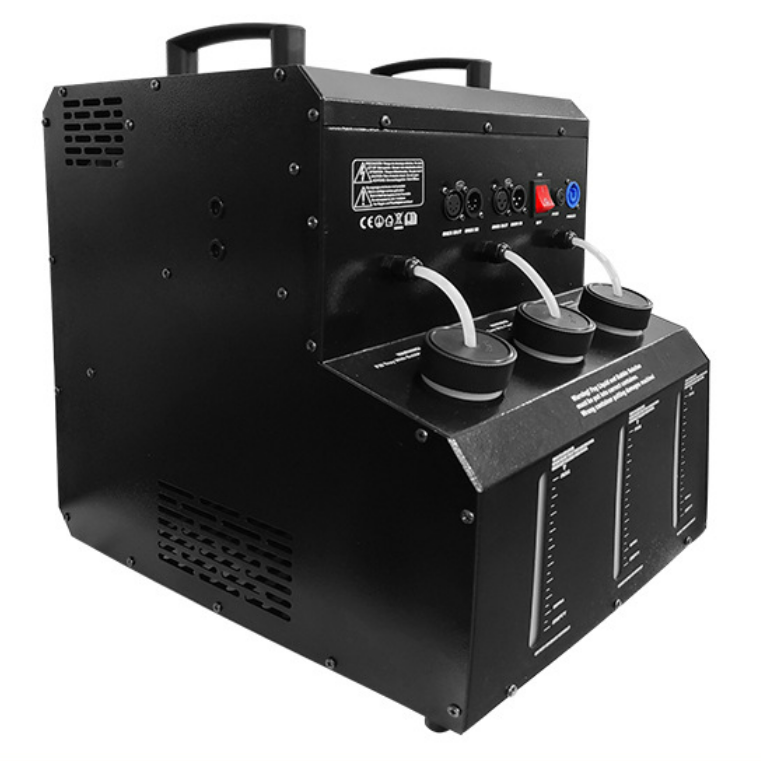
For the “misty bubbles drifting across the venue” effect, the mist bubble machine (combo unit) integrates a bubble generator with a fog system. It can produce clear bubbles, mist alone, or bubbles filled with a thin fog that releases a soft haze when they pop. These are ideal for slow songs, openings, and encores, providing a gentle contrast to the explosive effects.
Large outdoor spaces require high-output units with good throw distance and wind resistance. DMX/RDM integration allows them to be seamlessly programmed into the show. Consumable quality is paramount—high-grade bubble fluid and fog juice last longer, slip less, and reduce clean-up.
Additional effects like flame projectors and confetti cannons may be used depending on the artist’s style. Crucially, all these units are controlled via the lighting console, not manual remotes, ensuring every effect hits the exact beat.
IV. The Control Nerve Center: Hardware Consoles & Network Architecture
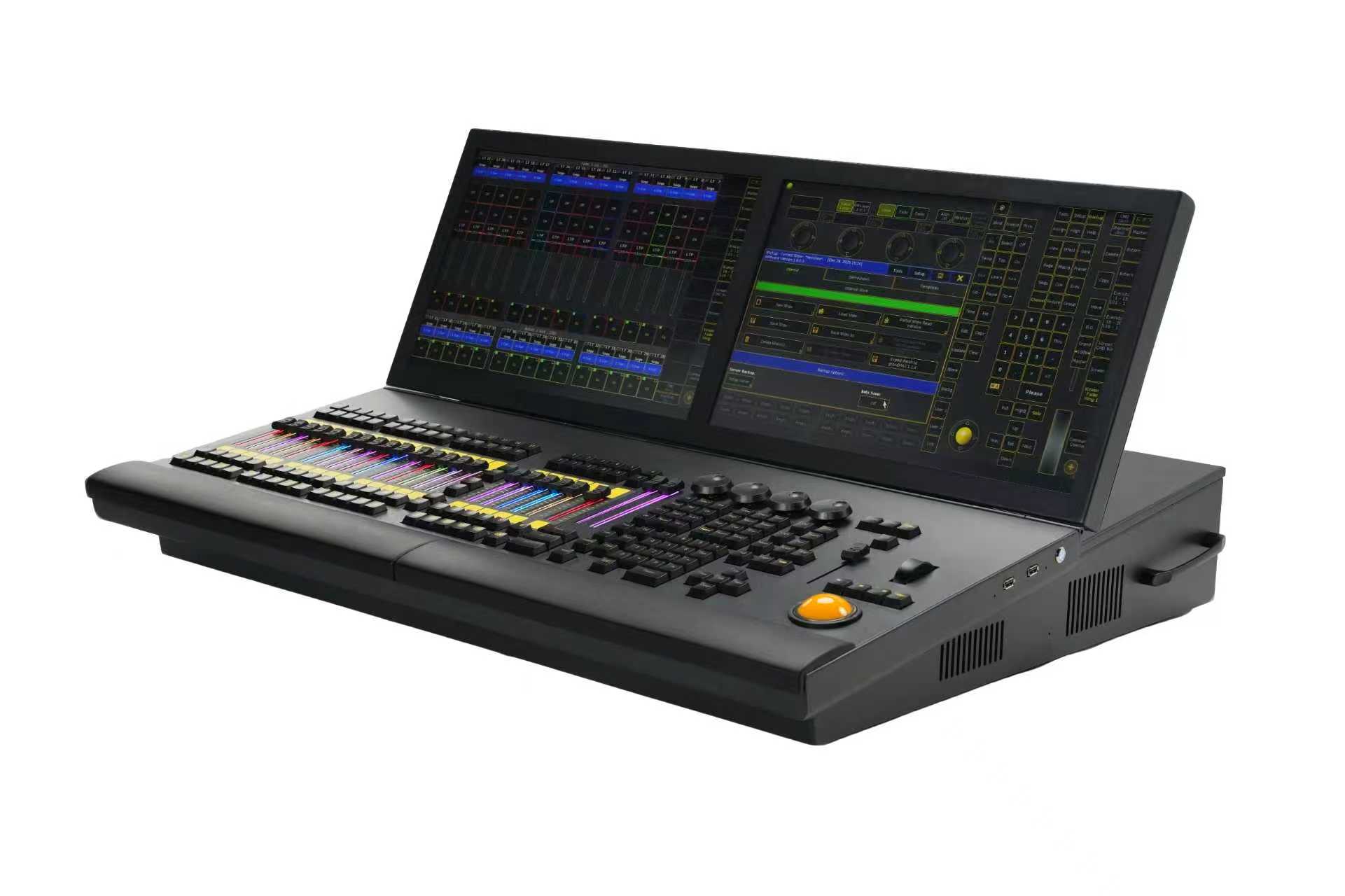
Great fixtures and effects are just isolated hardware without a central brain. At Guangzhou Music Park, the core is a professional hardware lighting console (such as KingKong, MA, or Tiger series). The console handles all programming, scene storage, and real-time playback. Mobile apps are used only for simple parameter checks or temporary adjustments, never as primary control—industry standard for major outdoor shows.
The control network is layered: DMX512 remains the foundation, but for large-scale productions, Art-Net and sACN protocols are used over Ethernet to manage massive fixture counts with simpler cabling. Many modern outdoor fixtures also support RDM (Remote Device Management), allowing the operator to remotely read device temperature, address, and fault status—saving immense time on maintenance, especially for fixtures rigged high up on trusses.
Before the show, lighting programmers build a time-coded sequence for each song, specifying every cue—from beam movements and color changes to smoke and spark triggers. During the live performance, the operator can improvise and fine-tune these scenes to match the artist’s energy.
Signal redundancy is critical: dual backup lines ensure that a single cable failure won’t cause a blackout. Waterproof connectors, signal amplifiers, and Teflon-coated high-temp cables are standard—because moisture ingress at any junction can lead to flickering and loss of control.
V. Real-World Pain Points: Why “Same Specs” Don’t Mean the Same Price
Guangzhou Music Park is based in Guangdong, China’s heartland for stage equipment manufacturing. While the short supply chain is a huge advantage, quality varies wildly. Two products with identical spec sheets can differ dramatically in price, and buyers who focus only on printed specs often pay the price on site.
For outdoor moving heads: Both may say “IP65,” but cheap units are often just glued together—no real circuit protection. Genuine outdoor models feature true structural sealing, die-cast aluminum bodies, and redesigned thermal management for a wide temperature range (-30°C to 50°C). The quality of motors, lenses, and igniters is the real differentiator. Cheap motors start jamming after a few shows; poor igniters burn out lamps; inferior coatings degrade output over time.
For effects machines: The cost difference lies in the oil pump, heating block, and temperature control circuit in jet smokers; the heating module in spark machines; and the fan/atomization assembly in bubble machines. Cheap test units may work fine in a demo but fail under the continuous heat and vibration of a 4-hour festival.
And don’t overlook consumables: low-quality smoke oil, spark powder, and bubble fluid not only perform worse but also corrode internal components, drastically shortening lifespan.
For international buyers, certifications are non-negotiable. Laser systems require IEC60825-1 and FDA (US) paperwork; electrical products need CE-LVD and EMC. English manuals, DMX charts, and troubleshooting guides are mandatory—missing these means losing the sale.
VI. Global Trends in Festival Stage Equipment (2026 Outlook)
The setup at Guangzhou Music Park reflects broader global trends in the live event production industry:
Rise of Weatherproof Fixtures: As the number of open-air festivals skyrockets, demand for IP65/IP66 rated gear is booming. Buyers are now demanding real-world testing (rain/heat), not just printed labels. Lightweight die-cast aluminum is the trend for easier freight and rigging.
Smart Control & AI: RDM, Art-Net, and sACN are becoming standard. AI-powered auto-tracking follow spots are reducing manual labor. While hardware consoles remain supreme, OTA firmware updates are now available in high-end fixtures for remote troubleshooting.
Modularity & Serviceability: Rental companies are prioritizing total cost of ownership. Easy-to-swap modules (power supplies, motors, optical assemblies) mean less downtime and no need to send entire fixtures back to the factory for repairs.
Special Effects Safety & Evolution: Spark machines and LED jet smokers are rapidly replacing traditional CO₂ systems and gunpowder-based fireworks—they’re cheaper to run and safer. Safety standards (SPS for lasers, thermal cutoffs on spark machines) are now mandatory entry requirements.
LED vs. Discharge Lamps: LED moving heads are increasing market share. However, 380W discharge beam lights still command a massive installed base and remain a key SKU for rental houses worldwide—both technologies will coexist for years.
“China Smart” Goes Global: With the Guangdong cluster as the global manufacturing hub, equipment now supplies both domestic festivals and exports to the Middle East (surge in night tourism), Europe (strict certification), and Southeast Asia (cost-effective high quality).
VII. The Art of Stagecraft: Equipment Serves Music, Technology Delivers Emotion
Looking back at the Guangzhou Music Park Festival—the erupting smoke, the shimmering sparks, the floating misty bubbles, the sharp beams cutting the sky, and the lasers painting abstract art—none of these machines mean anything on their own. They are tools serving the music’s emotional journey.
In soft, lyrical passages, it’s the gentle haze and warm, muted colors that create a dreamlike space. In the raging crescendo, it’s the explosive smoke, cascading sparks, and frenetic beams that make the audience’s internal fervor tangible—converting what we hear into something we can see. Technology is always the vehicle; what truly moves the crowd is the emotional power of the music delivered through synchronized light and sound.
For equipment professionals, success lies not in winning spec-sheet battles. It’s about understanding how gear behaves in real-world festivals, grasping the pain points of rental houses and production companies, and focusing on reliability, serviceability, and safety. When hardware, software control, and creative programming merge seamlessly, the result is unforgettable—show after show.