B2B Stage Lighting Manufacturer | Custom & Rental Stage Light Solutions

Broadcast‑First Awards Ceremony Stage Lighting Design Case Study For Large Sports‑Arena Gala
broadcast‑first awards ceremony stage lighting design case study large sports‑arena gala multi‑camera 4k broadcast lighting project

The broadcast‑first awards ceremony stage lighting design case study analyses real‑world lighting implementation for large‑scale film awards gala held inside a converted Olympic‑grade sports arena. This type of event faces multi‑layer challenges: balancing live‑venue viewing experience for thousands‑strong on‑site audience together with high‑quality multi‑camera 4K UHD television broadcast output. Designers must respect solemn ceremony tone while delivering vivid visual impact for performance acts. Additional constraints include giant LED wall coordination, original building structural limits, rigging load‑rating restrictions and strict anti‑glare requirements for broadcast cameras. The core design principle follows this clear priority: prioritise portrait quality, elevate ceremony atmosphere, support stage performances, and make lighting serve narrative storytelling, instead of over‑relying on spectacular beam special effects. This case study sums up spatial lighting logic, facial‑illumination setup, segment‑by‑segment cue programming, hardware deployment, technical trade‑offs and replicable best practices for global event producers. For more professional stage production reference, check our complete‑guide‑to‑stage‑lighting‑controllers.
With its vast arched ceiling and expansive, multi-thousand-square-metre interior, the venue posed a monumental challenge for the lighting and stage design teams. They had to balance live coverage for a 10,000‑person audience with pristine broadcast quality for multi‑camera television feeds; honour the solemnity and elegance of a film awards gala while delivering dynamic, expressive visuals for performance segments; and contend with giant LED walls, the building’s original architectural constraints, rigging load limits, and the exposure demands of dozens of broadcast cameras.
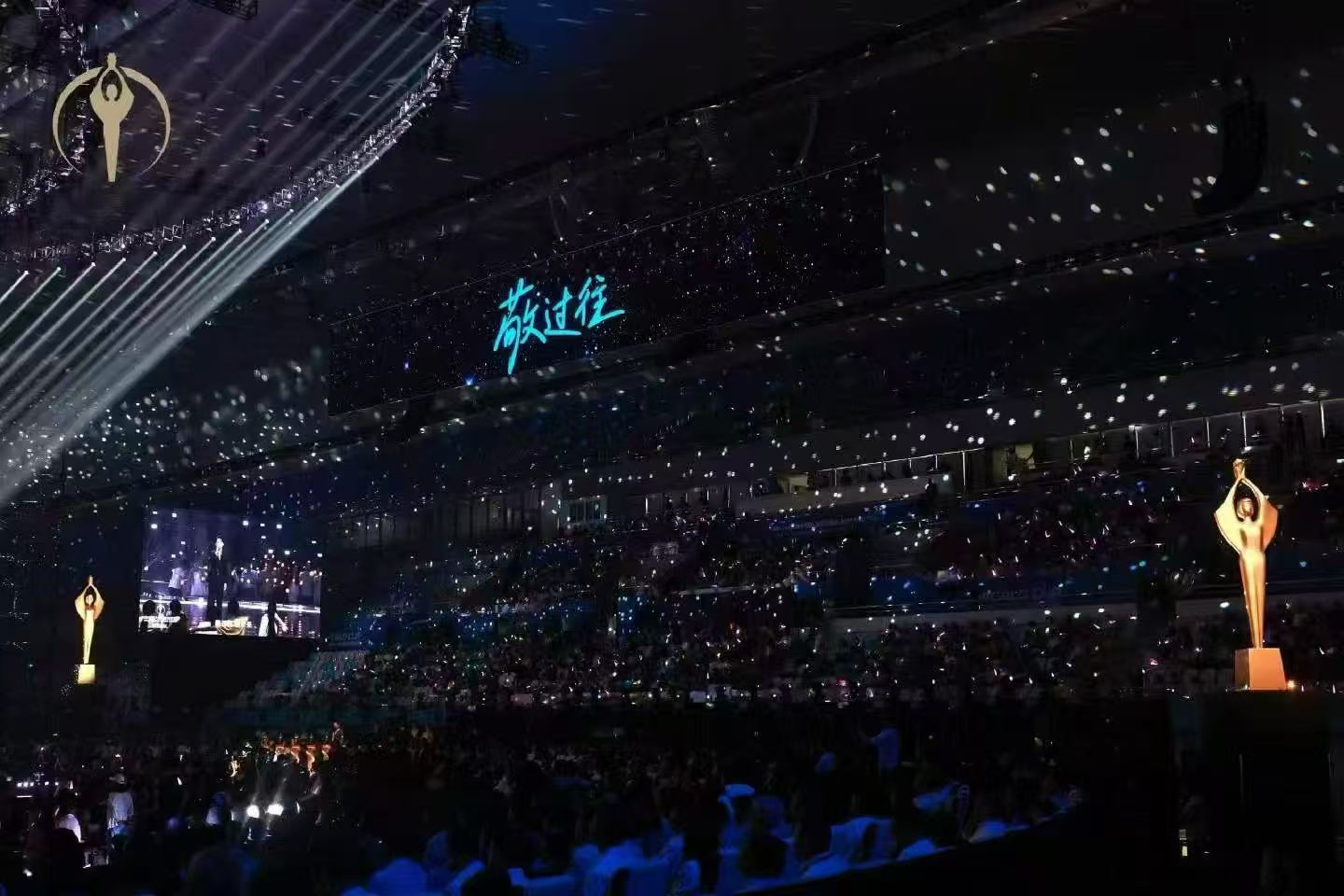
The core design philosophy can be summed up in one line: prioritise the portrait, elevate the ceremony, support the performance, and let light serve the narrative. Rather than chasing overwhelming beam effects, the team placed broadcast image quality, facial lighting texture, and emotional pacing above all else. Through precise coordination of colour temperature, contrast, spot tracking, and environmental washes, they delivered a masterclass in cinematic storytelling – a lighting blueprint that sets a new benchmark for domestic film award galas.
This article breaks down the entire visual ecosystem, covering: stage base design, spatial lighting logic, facial illumination systems, segmented cueing for each ceremony flow, equipment deployment, LED‑screen synergy, technical constraints, creative highlights, and practical trade‑offs.
I. Stage Foundation & Ambient Lighting – Crafting a Cinematic Temple in a Mega‑Venue
The Ice Ribbon’s sheer scale – high dome, vast floor area, dispersed seating – risked creating a disconnect between stage and audience, or a sense of empty vastness. The stage design employed an ultra‑wide main LED screen, multi‑tiered stepped platforms, and auxiliary side screens, with a blossoming floral motif as the central visual identity, deeply tied to the Hundred Flowers IP.
The lighting team utilised the dome’s truss structure to mount an extensive overhead fixture matrix, placing moving beams, wash lights, and framing/profile spots across overhead trusses, side rigs, and floor‑level front‑light positions – effectively re‑drawing the venue’s visual boundaries.
- Ambient Colour Palette
The show deliberately avoided the over‑saturated reds and greens common in traditional variety shows, opting instead for a cinematic, low‑saturation colour system. During the core awards segments, warm amber and soft gold dominated, creating a noble, ceremonial atmosphere. For VCR playback, retrospective clips, and transitional moments, the palette shifted to deep ocean blue and cool silver‑grey, dimming the environment to direct all attention to the screen imagery. Transitions were never abrupt – all colour changes used slow fades, ensuring smooth, flicker‑free visuals for television. - Beam Lights for Spatial Sculpting
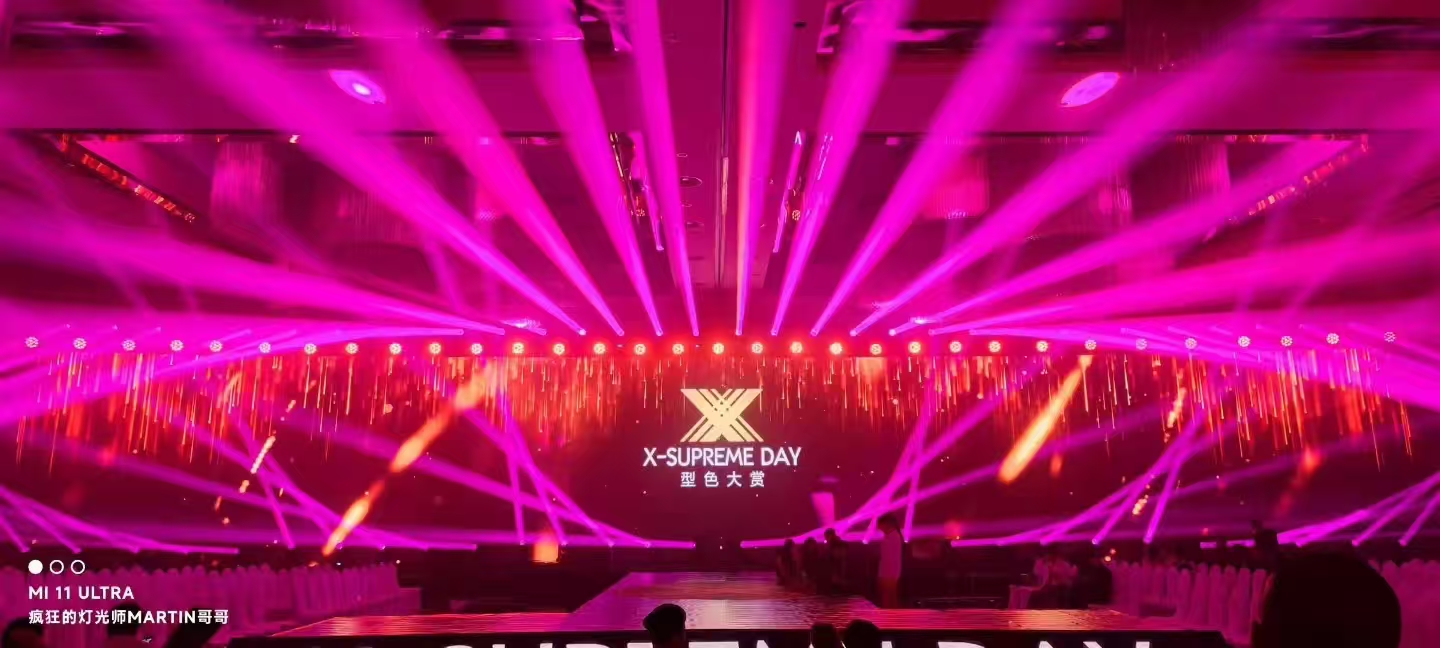
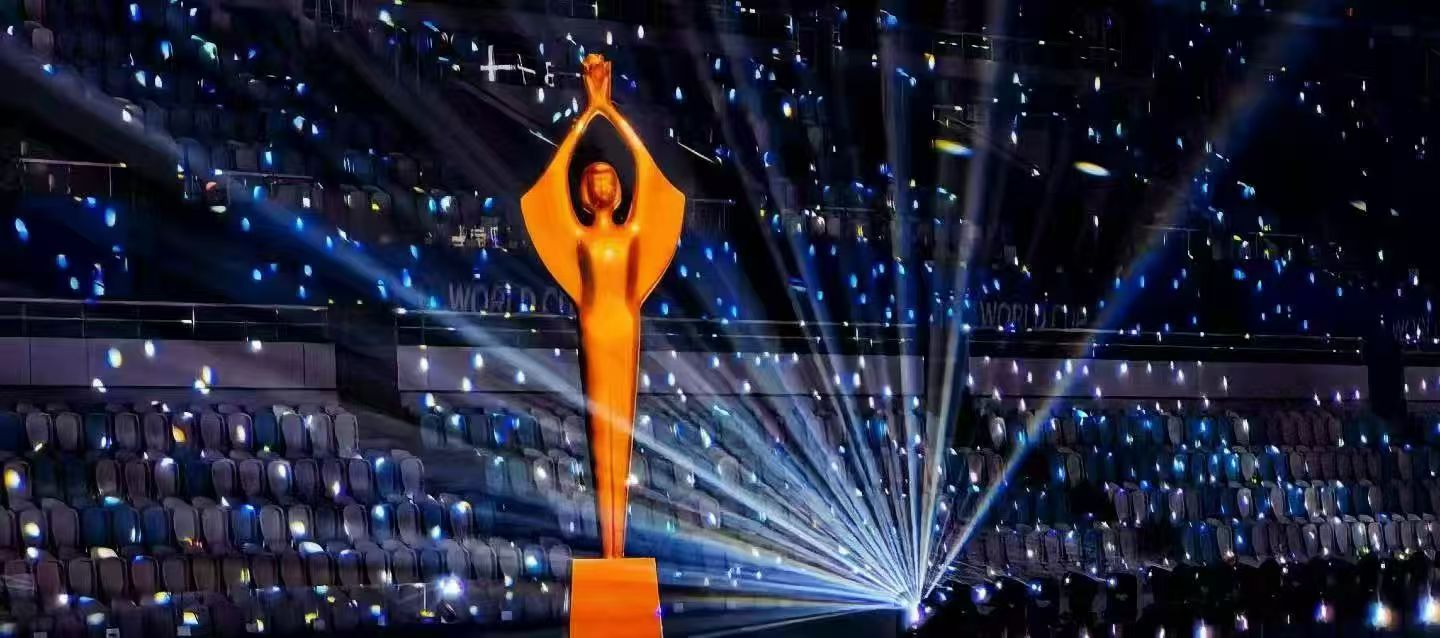
Moving beams from the overhead trusses were tasked with defining the venue’s spatial contours. In the opening, award‑announcement moments, and performance acts, they released thin, clean beams that traced the stage tiers and the dome’s circular structure, adding powerful depth to an otherwise flat 2D broadcast image – solving the common problem of large venues looking dimensionally compressed. Crucially, during speeches and formal presentations, most beams were turned off entirely, avoiding any distraction from the ceremony’s gravity. - Zoned Brightness Control – Clear Stage‑Audience Separation
Following a theatrical “dark‑house, bright‑stage” approach, the audience area was kept at a low ambient level – just enough for safety – so that camera shots of the crowd remained free of stray colour patches or distracting highlights. All focus stayed on the stage. A subtle fill light was added for the jury section, ensuring that reaction shots of voting and close‑ups remained properly exposed – a thoughtful nod to broadcast needs.
In venues converted from sports arenas, environmental light spill is a notorious problem that dilutes the main stage. This design, through meticulous zoned dimming, avoided that pitfall with flying colours.
II. Facial Lighting – The Heart of a Broadcast Gala
Over 70% of the broadcast consists of close‑ups and mid‑shots of presenters, nominees, and winners. The quality of facial lighting directly determines how people appear on screen – and it received the most rigorous attention.
- Multi‑Angle Composite Facial Lighting
The team deployed multiple layers of fixed face lights, supplemented by side fills and back‑rim lights, covering the main camera, left/right steadicams, and jib arms. The key light used high‑CRI warm‑white sources to reproduce natural, true‑to‑life skin tones; fills reduced harsh shadows and contrast; and backlights traced shoulders and hair, separating subjects from the LED screen and adding three‑dimensional depth – ensuring that whether standing at the podium or walking the stairs, every winner received stable, uniform illumination. - Zone‑Specific Lighting for Stage Functions
Podium/Speech Zone: Highest illumination, multiple fixtures overlapping to create a soft, even patch. Nominees and winners appeared with transparent skin tones and gentle shadows from every angle – the most critically controlled zone.
Performance Zone: Parameters dynamically adjusted – warmer/cooler contrasts for dance numbers, neutral white for spoken‑word pieces.
Audience & Guest Seating: Minimal fill, enough for recognition but strictly sub‑stage brightness, adhering to the “stage‑first” principle.
- Lens Flare Control
All face lights and follow‑spots were fitted with barn doors, hoods, and anti‑glare grids, rigorously controlling beam angles to minimise direct lens hits. This prevented the hazy veiling glare and white‑out flares that plague many large‑scale productions, ensuring stable, crisp 4K UHD broadcast quality.
III. Cue‑by‑Cue Lighting – Emotional Storytelling Through Every Segment
A great awards show lighting design is never static – it breathes with the narrative rhythm. The Hundred Flowers team scripted dedicated looks for each segment, building emotional arcs step by step.
- Opening
Accompanied by the theme music, overhead beam arrays exploded with golden light, sweeping across the hall as the screen blossomed with floral visuals – all bathed in rich amber. The beams moved with the music but avoided excessive strobing, maintaining a grand yet restrained opening tone. - VCR & Retrospective Segments
During playback of past highlights and nominee reels, most stage lights faded out, leaving only minimal floor‑level safety lighting. The entire venue dimmed, handing full visual authority to the screen – a classic “less‑is‑more” choice that respects the content. - Nomination Announcement & Climax
The nomination phase held a steady deep‑blue/antique‑gold atmosphere, with a spotlight pre‑positioned on the podium. The moment the winner’s name was read – the emotional peak – the framing spot locked onto the winner, beam arrays fired in synchrony, and a golden wash flooded the stage, brightness surging dramatically. This explosion of light amplified the thrill of revelation and celebrated the joyous moment. - Guest Presentations, Awards & Acceptance Speeches
Immediately after the climax, all flashy effects and colour chases were dialled back. Only soft face lights and warm amber washes remained. Throughout the speeches, no strobes or coloured beams intruded. This is the defining difference between a concert and an awards ceremony: the former serves rhythm, the latter serves the speaker – letting the audience listen with full attention and preserving the dignity of the honour. - Artistic Performance Segments
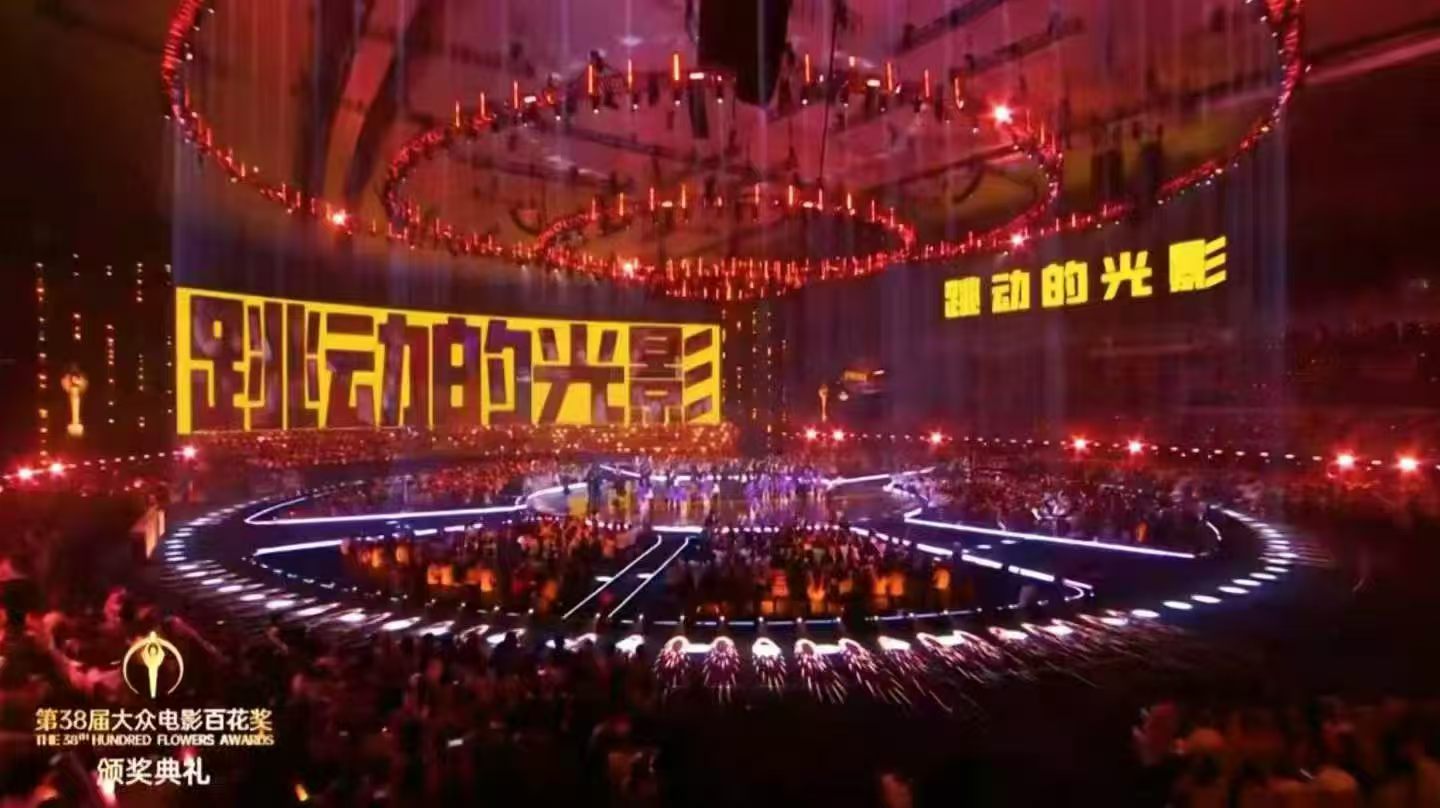
Only during the performance interludes did the lighting team unleash full creative freedom – beams, pattern projectors, and washes in full play. Tender ballads used soft, low‑saturation warm tones; upbeat, rhythmic numbers featured sharp beam chases and crisp cue‑point hits. The projectors cast film‑reel textures and floral patterns onto the screens and stage floor, reinforcing the cinematic brand identity. Pieces like The Backbone (a dramatic performance) and Dancing Light & Shadow saw lighting switch emotionally between cool and warm in step with the narrative. - Grand Finale
After all awards were presented, the lighting returned to a unified warm gold. Beams slowly converged as the main screen displayed the full floral motif, and all winners gathered for the group photo – even, shadow‑free coverage ensured everyone looked their best, bringing the gala to a harmonious close.
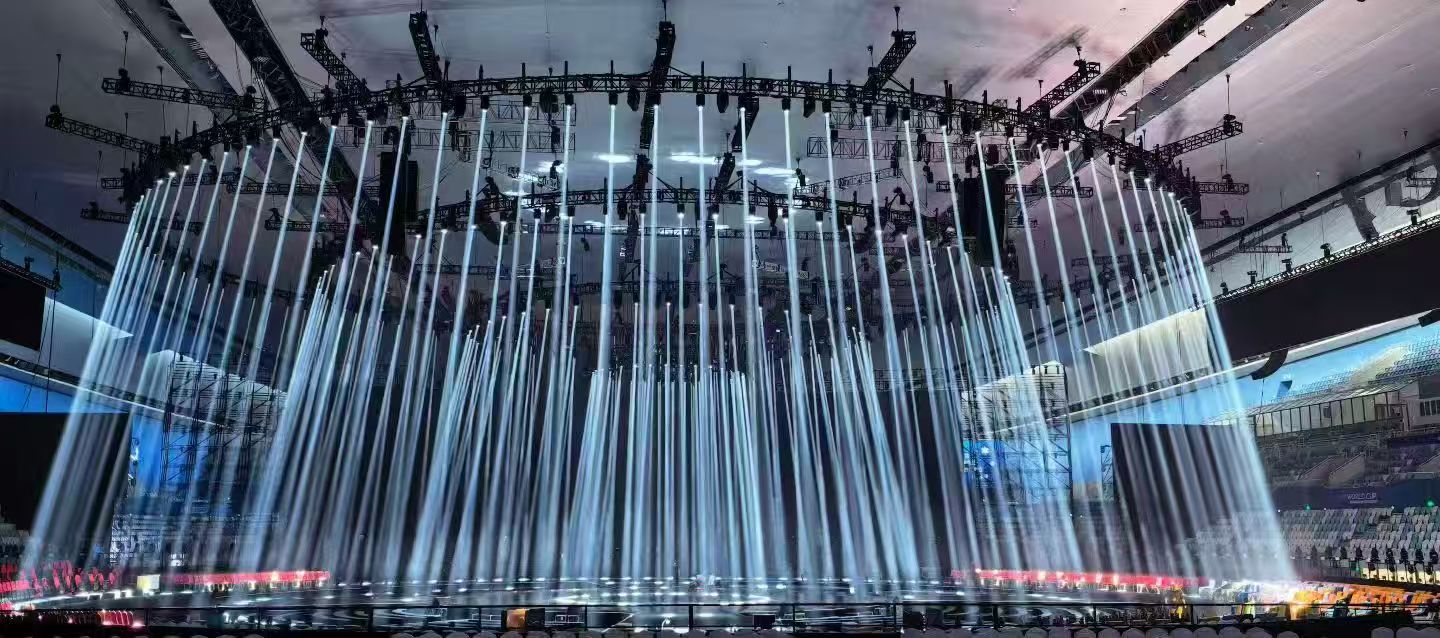
IV. Core Equipment Deployment – Practical Performance of the Follow‑Spot System
This large‑scale gala employed a comprehensive fixture portfolio, each type with a distinct role.
Framing/Profile Spots – The most critical category, serving as the primary follow‑spot system. Unlike standard beams, profile spots allow precise edge cropping, delivering a clean, razor‑sharp patch that isolates the subject while keeping the background pristine. As presenters and winners walked from the stairs to the podium, multiple profile spots formed a tracking group, moving smoothly with the talent. The broadcast close‑ups were crisp and premium, with zero light spill – a far superior solution to traditional manual follow‑spots in a 10,000‑seat arena.
Moving Beams & Pattern Projectors – Reserved for the opening and performances, sculpting space and projecting film‑reel and floral gobos. They remained completely off during formal award segments – “flashy when needed, silent when not.”
LED Wash Fixtures – Distributed across the apron, side wings, and overhead trusses, responsible for seamless colour transitions between gold, blue, and silver‑grey across the entire environment.
Haze & Smoke Effects – Used sparingly, only in the opening and certain performances, to make beams visible and airy. During announcements and speeches, haze was stopped entirely – because floating particles cause diffuse reflection that turns facial lighting grey and muddy, ruining broadcast close‑ups. This restraint avoided a common trap seen in many other productions.
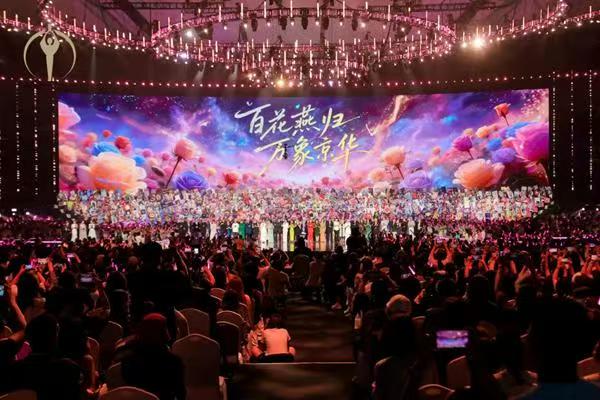
V. Technical Synergy Between the Giant LED Screen and Lighting
With an ultra‑large main LED wall, balancing screen brightness and stage lighting was one of the project’s greatest technical hurdles. High‑brightness LEDs spill light onto performers, washing out skin tones and causing colour casts that compromise facial light quality.
The team adopted two strategies:
Dynamic screen brightness control – reducing LED output during formal segments and raising it during performances.
Colour harmonisation – when the screen displayed golden floral imagery, stage lighting used matching golden‑amber; when the screen switched to deep‑blue content, ambient lighting shifted to cool blue. This eliminated colour clashes and ensured a unified, cohesive palette across the entire frame.
VI. Technical Challenges of an Olympic Venue Conversion
The Ice Ribbon was never designed as a theatre, presenting unique constraints:
The saddle‑shaped cable‑net roof required load‑safety verification for every rigging point – fixture weight and positions had to respect structural limits.
Extreme throw distances demanded high‑output fixtures with carefully chosen beam angles.
Significant reverberation and a 10,000‑person capacity required close coordination between lighting, sound, and set design to suit the acoustics and optics of the vast space.
That the final design succeeded under these constraints speaks volumes about the team’s on‑ground execution capability.
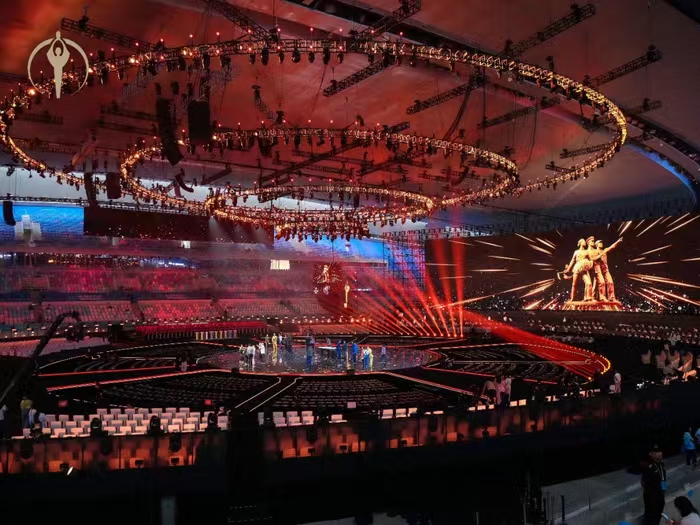
VII. Creative Highlights
Clear priority logic – People > narrative atmosphere > special effects. The design never sacrificed portrait quality for flashy, shareable moments, resisting the common trap of “style over substance.”
Deeply embedded thematic imagery – Gobos with film reels and floral motifs made the lighting uniquely identifiable to the Hundred Flowers brand – not a generic template transferable to any commercial show.
Distinct segment‑by‑segment variation – subdued for VCRs, explosive for wins, restrained for speeches, vibrant for performances – lighting followed the narrative arc to create a complete emotional journey.
Mature follow‑spot integration – a multi‑unit profile‑spot system delivering smooth, clean tracking, elevating the quality of every close‑up.
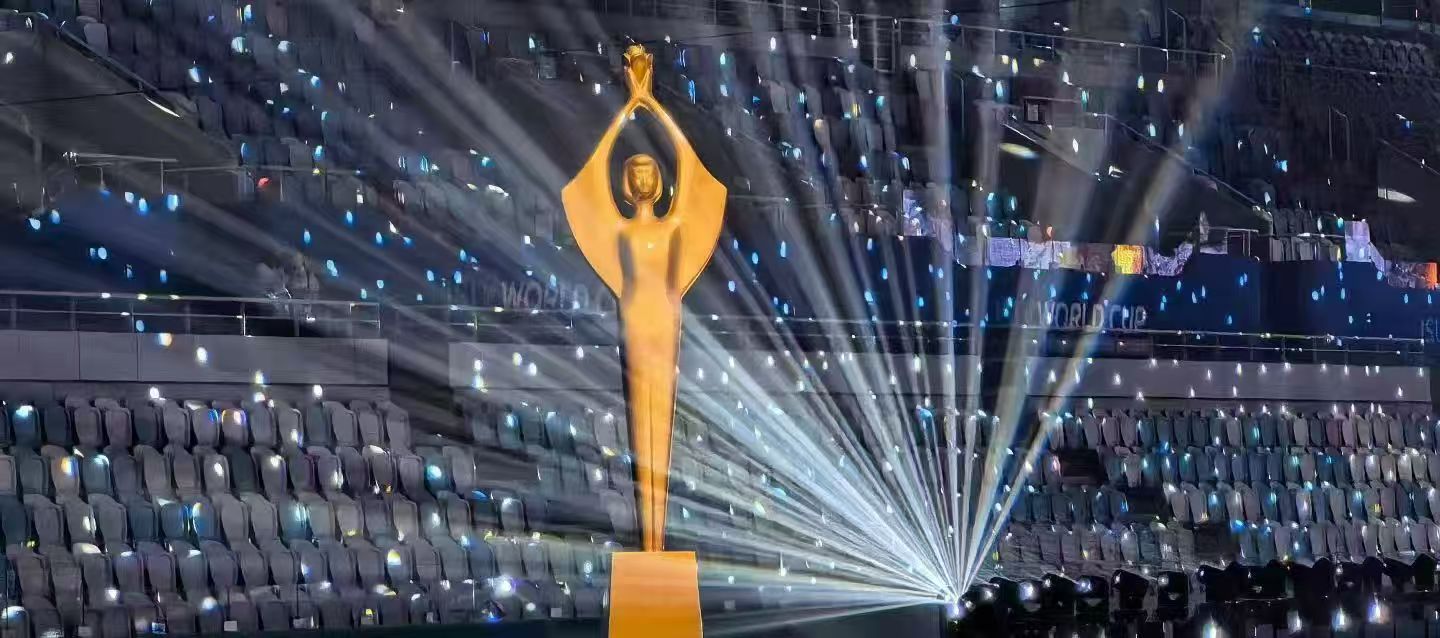
VIII. Practical Limitations (The Trade‑offs of Live Broadcast Galas)
Broadcast‑standard constraints – many high‑impact beam effects had to be limited in duration to prevent camera over‑exposure and lens flare. The live audience experience was inevitably tempered in favour of the television image – an unavoidable compromise.
Remote guest‑area fill – distant seating sections received limited light; when wide shots panned to far bleachers, some peripheral faces appeared less bright – a challenge impossible to fully overcome in a 10,000‑seat arena.
Exposure balancing across dozens of cameras – lighting parameters had to be negotiated to accommodate varying camera setups, making it difficult to achieve perfection simultaneously for both live eyewitnesses and TV viewers.
Conclusion
The 38th Hundred Flowers Awards stands as a mature, textbook example of large‑scale film gala lighting design in China. The entire system understood that the real protagonists are the people and the honour itself – lighting is merely a tool to serve the story.
Under the immense physical constraints of an Olympic stadium, the team masterfully reconciled giant LED walls, multi‑camera broadcasting, and a live audience of thousands – delivering solemn restraint for ceremonies and unleashed creativity for performances. With precise framing spots, rigorous facial illumination, and emotionally cued scene‑by‑scene transitions, they completed a cohesive visual narrative.
The lasting lesson for the industry: great stage lighting isn’t about how spectacular the effects are – it’s about whether the light serves the event’s identity and content with accuracy and purpose.
FAQ for broadcast‑first awards ceremony stage lighting design case study
Q: What practical value does broadcast‑first awards ceremony stage lighting design case study bring for event‑production teams?
A: This real‑project case provides replicable workflow for arena‑hosted awards galas with live‑broadcast requirement. It clarifies priority of portrait quality over spectacular beam effects, shares zoned‑lighting strategy, profile‑spot tracking scheme, LED‑screen colour‑matching rules and smoke‑haze management experience, helping designers avoid common broadcast‑lighting pitfalls.
Q: Why disable haze and smoke machine during award‑acceptance speech segments?
A: Floating aerosol smoke particles produce light diffuse reflection. It will contaminate facial‑lighting, turn skin‑tone grey‑muddy, and severely degrade close‑up broadcast‑picture quality. Haze equipment should only be activated for opening and performance‑act sections.
Q: What fixture plays the most critical role for large‑venue broadcast‑oriented awards ceremony?
A: Profile / framing spot lights. Multi‑unit combined profile‑spot tracking group can output clean edge‑isolated light patch without stray spill, steadily track talent movement, deliver premium‑quality close‑up shot effect, better than traditional single manual follow‑spot inside huge‑capacity arena.
Q: What is the core difficulty of lighting design for sports‑arena‑converted award‑gala?
A: Include roof‑rigging‑point load‑safety constraints, ultra‑long light‑throw‑distance requirement, giant LED‑screen light‑spill interference, balancing dual‑target demand of on‑site audience experience and multi‑camera 4K broadcast output. Multiple‑department advance coordination is essential.
Q: How to solve colour conflict between huge LED wall and stage lighting for broadcast gala?
A: Two key measures: dynamic real‑time LED‑screen brightness adjustment for different ceremony segments; synchronise stage ambient‑lighting colour‑tone matching LED‑screen main colour, to realise unified visual frame inside camera shooting range.
Q: What is the core design philosophy for broadcast‑first awards‑ceremony lighting?
A: Prioritise human portrait quality, elevate solemn ceremony atmosphere, support artistic‑performance effect. Lighting is tool serving event narrative content, instead of pursuing excessive spectacular beam special‑effects for visual gimmick.
B2B Wholesale & Project‑Solution CTA
If you are event‑production agency, lighting‑design studio or venue‑integration contractor looking for reference from this broadcast‑first awards ceremony stage lighting design case study, we can offer fixture‑selection suggestion, broadcast‑oriented lighting‑scheme consulting and large‑arena gala technical reference document for your award‑ceremony, corporate‑gala and broadcast‑live projects. Contact our B2B sales‑engineering‑team right now to receive detailed fixture‑reference list, project‑case material and bulk‑order‑quotation support for your upcoming high‑end live‑show production.
#showinlighting #awardceremonylighting #broadcaststagelighting #largevenuelighting #profilespotlight #galaeventproduction #tvliverigging #stagedesigncase #cinematicstagelighting #b2bliveproduction #eventtech