Shenzhen Showin Stage Lighting Co. Ltd

Stage Sparkle Machine Complete Diagnosis Troubleshooting And Prevention Guide For Live‑Event Rental Teams

The stage sparkle machine complete diagnosis troubleshooting and prevention guide delivers systematic fault‑check logic, error‑code explanation and standardized preventive‑maintenance workflows for cold‑spark effect hardware. Cold‑spark sparkle machines are widely adopted for concerts, theatre performances, wedding ceremonies and large‑scale commercial events. They create brilliant sparkling cascades with higher safety compared with traditional pyrotechnics. Nevertheless, this equipment integrates high‑temperature heating units, precision mechanical feeding structures and special metal‑powder consumables. Multiple failure risks may appear during high‑frequency rental cycles. Unexpected breakdown during key performance moments not only ruins show effects but also brings potential safety hazards. This guide sorts core system working principles, typical fault categories, rapid on‑site diagnosis steps and long‑term maintenance rules, helping stage technicians reduce unexpected downtime and guarantee stable live‑show output. For extra special‑effect lighting reference, check our website.
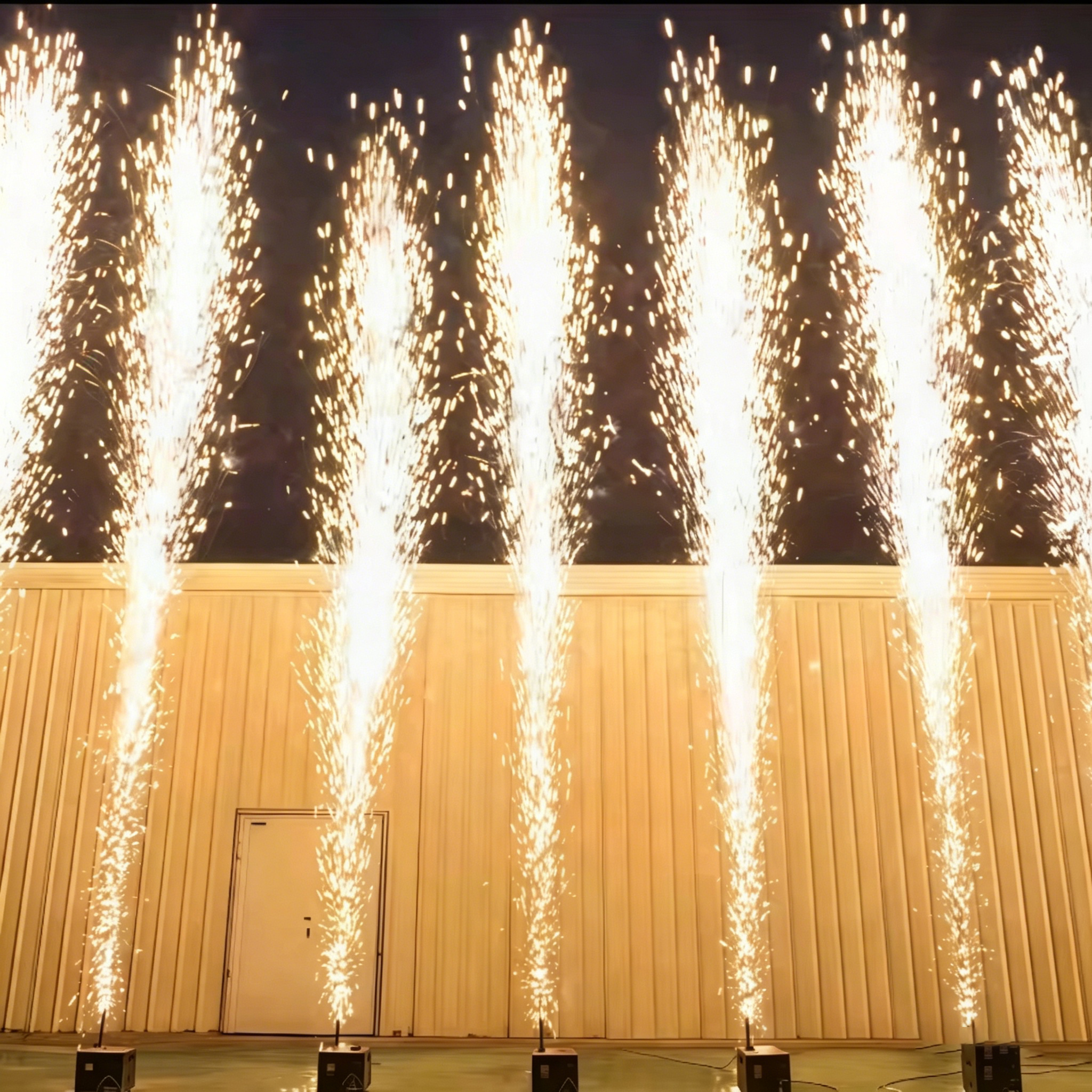
Working Principle Of stage sparkle machine complete diagnosis troubleshooting and prevention guide
Before fault diagnosis, understand three core interconnected subsystems of mainstream electronic sparkle‑machine hardware.
Heating System
- Heating elements heat the delivery tube up to hundreds of degrees Celsius, reaching metal‑powder ignition temperature.
- Thermocouple temperature sensor feeds real‑time temperature data back to main control board.
- Temperature too low: powder cannot ignite, output unburned dust‑like particles.
- Temperature too high: powder pre‑ignites inside tube, creates internal blockage and potential safety risk.
Feeding & Delivery Mechanical System (high‑failure‑rate module)
Two mainstream structural solutions:
- Auger screw‑conveyor type: Motor drives screw auger to quantitatively transport metal powder into heated tube. Most rental‑market sparkle machines adopt this solution.
- Negative‑pressure blower suction type: High‑pressure fan draws powder into heating pipeline. Performance heavily relies on fan health status; fan failure directly terminates spark output.
Powder ignites when contacting outside air after ejecting from nozzle and forms sparkling fountain visual effect.

Electronic Control System
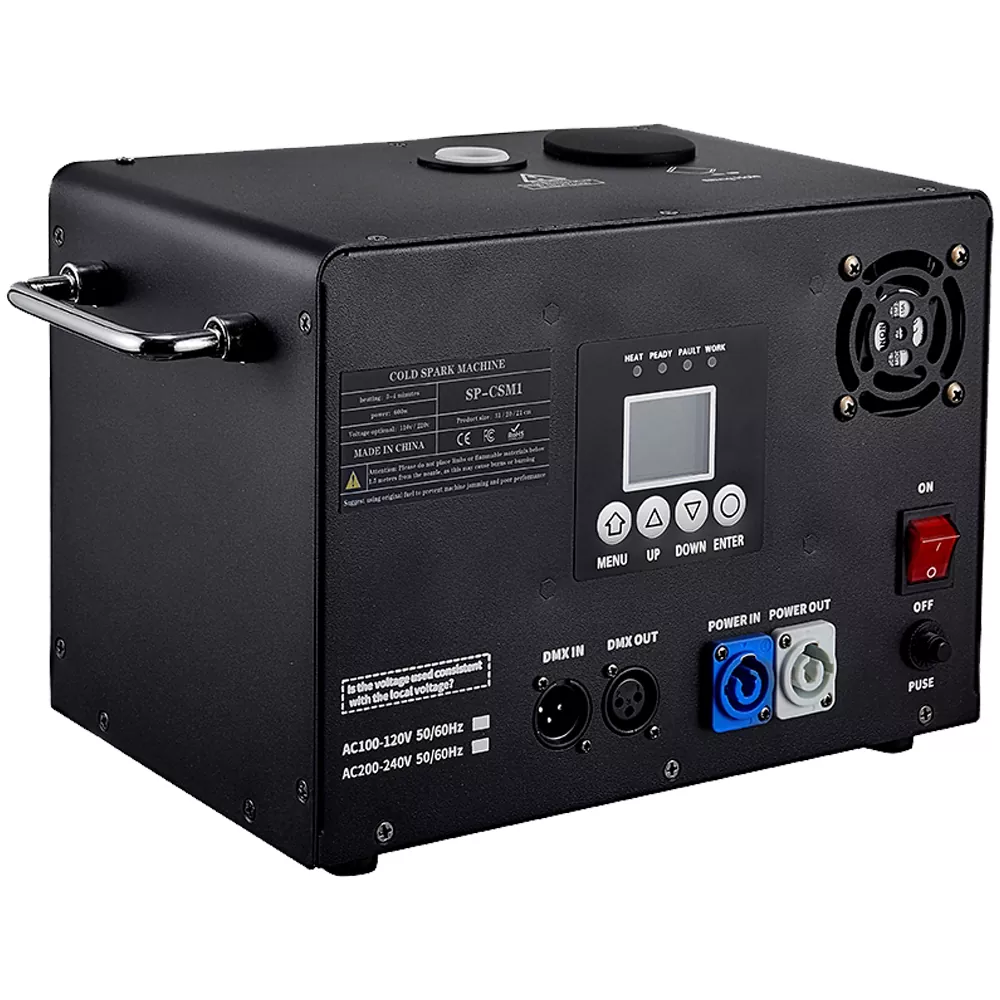
Includes main control board, DMX signal receiver and local operation interface.
- Responsible for pre‑heating cycle management, feeding‑motor speed adjustment and multi‑item safety interlock judgment.
- Built‑in multiple sensors: thermocouple, fan‑speed monitor, over‑current detection circuit.
- Once parameter exceeds safe threshold, the controller outputs E0‑E8 error codes and triggers protective shutdown to avoid component damage.
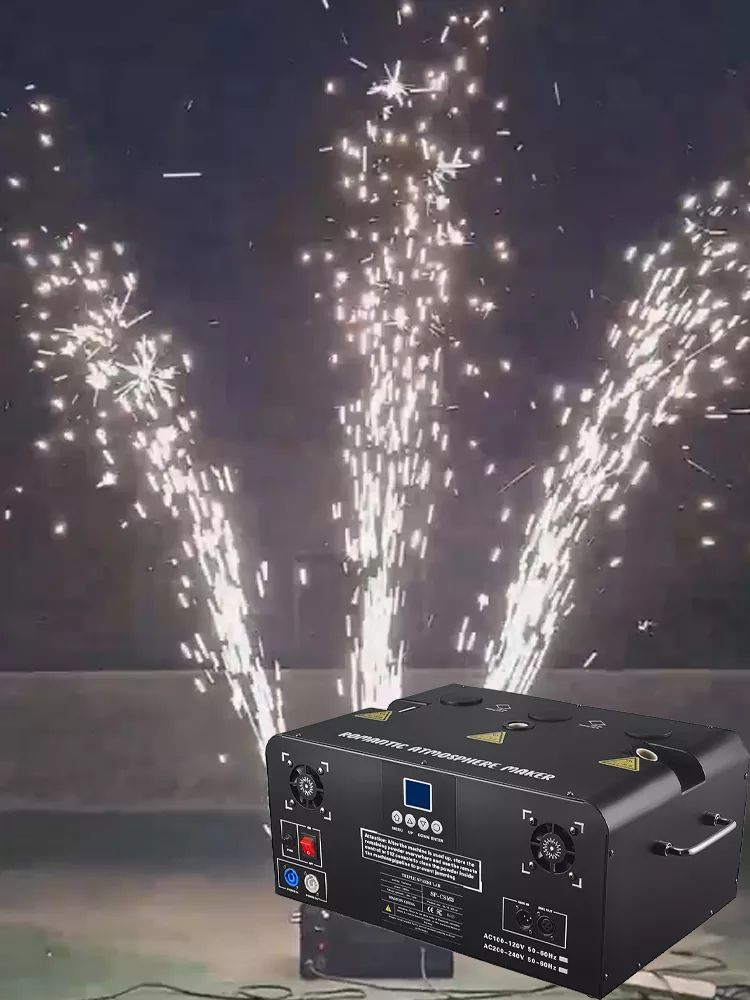
Three Major Fault Classification & Root‑Cause Analysis
Field failures mainly fall into mechanical blockage, temperature‑control anomaly, electrical‑control abnormality.
Mechanical Jam And Blockage Failures
This is the most frequently‑seen fault for rental‑cycle sparkle‑machines.
- Auger screw seizure (corresponds to error E2) Fine metal powder easily absorbs moisture and forms clumps. Dumping large‑volume powder directly into hopper or long‑time storage may make powder caking and lock auger screw. Motor triggers over‑current protection and stops feeding powder completely.
- Air‑vent clogging Metal‑powder sinter residue accumulates on air‑supply vents. Insufficient oxygen supply leads to dust ejection without real spark effect.
- Nozzle coking & slag build‑up Lack of post‑show cleaning makes residual hot‑powder cool and solidify inside nozzle. Gradually narrows outlet aperture, spark height weakens, and finally causes full nozzle blockage.
- Foreign‑object intrusion Dust, fiber fragments or small debris from stage site fall into hopper/nozzle, resulting in auger or fan mechanical lock‑up.

Temperature‑Control & Heating‑Related Failures
Temperature status decides whether the sparkle‑machine can run normally.
- Pre‑heat failure (Error E1) Heating‑rod burnout, insufficient power supply or thermocouple signal abnormality. Equipment cannot reach target temperature within preset time. System locks spark‑trigger command to prevent cold‑powder block‑up risk.
- Thermocouple sensor fault (Error E3 / E4) Sensor open‑circuit, short‑circuit or loose wiring. Control board cannot obtain valid temperature reading, activates safety lock and cuts off heating output.
- Over‑temperature protection trigger (Error E0 / E6) Continuous spark‑output exceeds time‑limit or cooling‑fan malfunction causes internal cabinet temperature to go beyond safe threshold, triggering emergency protective shutdown.
Electrical And Control‑System Anomalies
- Power‑supply & over‑load trouble (Error E8) Rated power consumption of sparkle machine ranges 400W‑600W. Excessively long extension cords, thin wire gauge, too‑many units daisy‑chained on single circuit cause voltage drop and insufficient current output. Manufacturer forbids connecting more than 6 sparkle‑machines on one single power loop.
- Blower / fan malfunction Fan‑motor damage or airflow‑channel blockage: heated powder cannot eject normally; hot air back‑flow may damage internal electronic assemblies. Partial models output dedicated fan‑failure error code.
- DMX signal abnormality (False‑fault caused by operation error) Loose DMX cable, wrong DMX address setting or console without sending trigger command. Equipment shows no response, while hardware itself keeps intact. This is easily overlooked in busy live‑site environment.
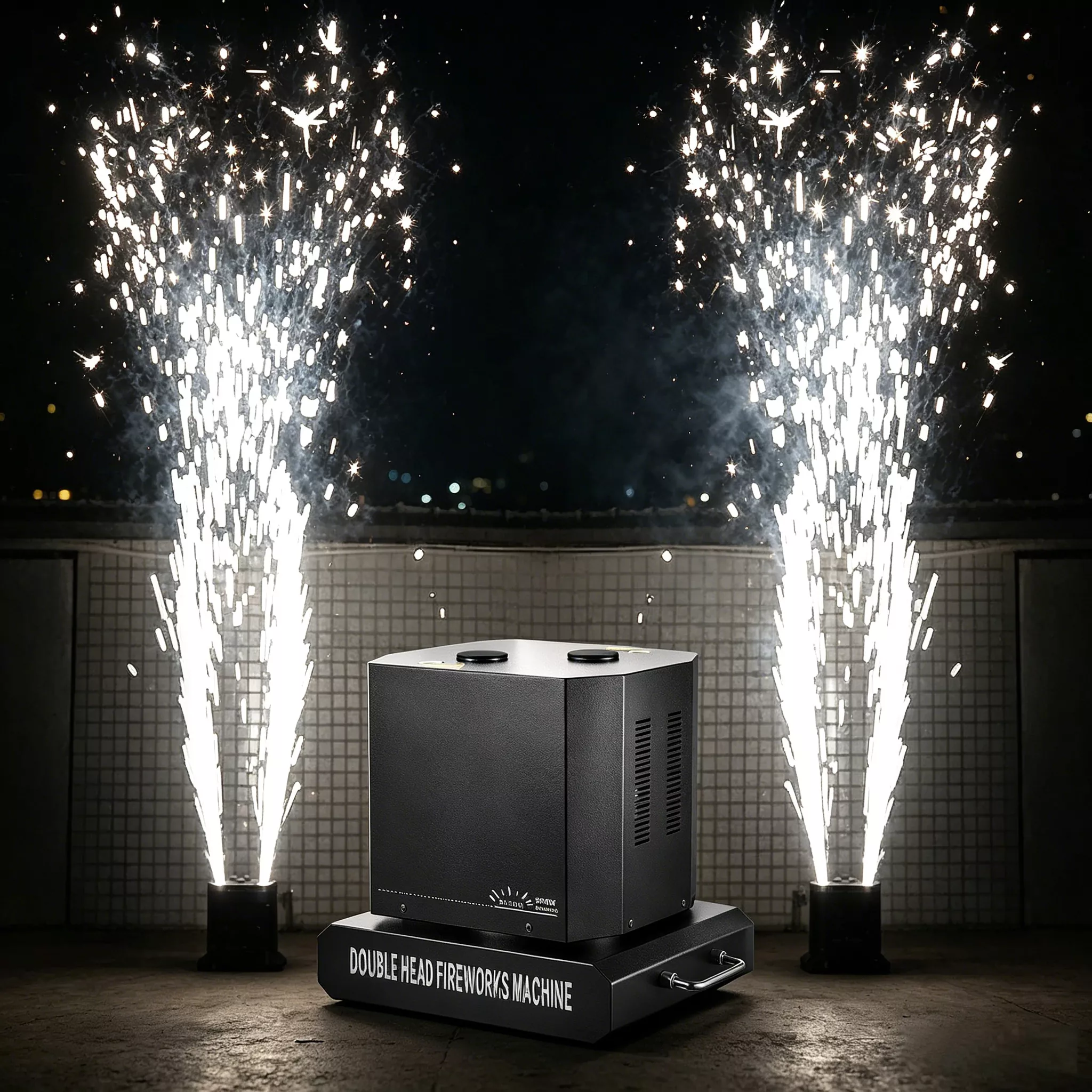
Systematic Fault‑Diagnosis Workflow
Follow inspection principle: Outside‑in, simple‑to‑complex, check electrical parts before mechanical disassembly.
Rapid On‑Site Checklist For Field Operators
- Inspect power and signal links: Confirm power plug in‑place, circuit breaker status, DMX cable connection; verify corresponding DMX channel fader position on lighting console. Judge working state via panel LED indicator light.
- Read hardware error‑code: Refer to official manual according to E0‑E8 display code to locate fault source quickly.
- Listen for abnormal sound after pre‑heating completes: Trigger spark command. No motor sound plus E2 error mostly means auger screw seizure; motor runs but no powder output points to empty hopper or feeding‑mechanism damage.
- Visual inspection: Check nozzle slag accumulation condition; confirm hopper powder stock, make sure powder keeps dry without caking.
Mechanical Maintenance Steps (Power‑Off & Full Cooling Required)
- Resolve auger screw jam Power‑off and wait for full cooling, open side panel. For belt‑driven auger model, manually rotate screw counter‑clockwise to release hardened powder clump. Empty remaining powder inside hopper, run purge cleaning cycle. If still stuck, disassemble feeding‑module and remove caked‑on residue manually.
- Clear air‑vent and nozzle blockage Only operate after equipment fully cools. Use fine steel needle or high‑pressure air‑gun to clean air‑vent sinter deposit. For nozzle coking, adopt brass or wooden scraper; do not use hard steel tool to scratch nozzle inner wall.
- Remove foreign debris Tilt or invert machine to shake out small foreign objects. If ineffective, implement formal disassembly operation.
Electrical & Heating‑Component Inspection (Only For Qualified Technicians)
- Heating‑rod resistance test by multimeter; replace heating element when open‑circuit appears. Fasten thermocouple wiring terminals; compare display reading with independent thermometer, replace sensor when obvious deviation exists.
- For over‑temperature alarm fault: Check cooling‑fan rotation status, clean dust on air‑inlet filter, guarantee enough ventilation clearance around unit. Never place equipment close to curtain or inside fully‑sealed narrow cabinet.
- Full‑load input‑voltage measurement: Keep input voltage within rated scope. Upgrade extension‑cable specification or reduce quantity of parallel‑connected sparkle‑machines when voltage drop is serious.
Preventive Maintenance & Standard SOP Operating Rules
Most sparkle‑machine malfunctions come from insufficient daily maintenance and non‑standard operation. Establish standardized workflow to greatly lower failure probability.
Mandatory Purge Cleaning Procedure After Every Show
This is non‑optional core daily maintenance step.
- Empty remaining powder inside hopper. Seal leftover powder inside air‑tight container and store under dry environment. Moisture absorption is top cause of powder caking and auger jam.
- Keep hopper empty, power‑on machine and reach working temperature, execute purge cycle, keep running until nozzle outputs no spark and no powder residue (normally takes around 30 seconds). Remove residual hot‑powder which will cool and form hard coking deposit.
- Visually inspect nozzle status after purge, clear leftover deposits timely.
Hard Operating Restrictions
- Max continuous spark output time: never exceed 30 seconds. Long‑time firing creates sharp internal temperature rise, triggering thermal shutdown or permanent component damage. For long‑duration spark effect, adopt multi‑unit alternate‑trigger grouping control.
- Machine working tilt angle shall not exceed 10 degrees. Large‑angle tilt causes uneven powder distribution inside hopper and leads to feeding‑mechanism overload or empty output.
- Only use manufacturer‑approved metal‑powder consumables. Different powder formulas own different ignition‑temperature parameters. Mixed‑use brings incomplete combustion or deflagration risk. When accidental powder ignition happens, do NOT spray water; adopt sand or Class‑D fire extinguisher for fire‑smothering.
Scheduled Deep‑Maintenance (Every 100 cumulative working hours)
- Inspect graphite bearing wear degree; excessive clearance will bring auger vibration, noise and final seizure risk.
- Test heating‑element insulation resistance.
- Clean control‑board dust with anti‑static brush.
- Retighten all wiring terminal screws.
Suitable Application Scenarios
This stage sparkle machine complete diagnosis troubleshooting and prevention guide provides practical technical reference for multiple B2B live‑event projects:
- Concert & Live Performance: Daily pre‑show inspection and post‑show maintenance for rental sparkle‑machine inventory, reduce show‑stopping fault risk.
- Wedding Banquet & Commercial Gala: Guide on‑site operators for rapid fault checking and standardized consumable management.
- Theatre & Fixed‑Venue Installation: Establish periodic maintenance schedule for long‑term repeated‑use sparkle‑effect hardware.
- Rental‑House Asset Management: Formulate equipment acceptance, cleaning and storage specification for high‑turnover rental stock.
- B2B Wholesale & Export Business: Supply after‑sales‑technical‑reference document for overseas clients.
Safety Reminder: Mechanical disassembly and electrical measuring work must be completed by trained qualified technicians, with machine fully powered‑off and completely cooled down.
FAQ for Stage Sparkle Machine Complete Diagnosis Troubleshooting And Prevention Guide
Q: What practical value does stage sparkle machine complete diagnosis troubleshooting and prevention guide bring for rental‑house and technical teams?
A: It sorts sparkle‑machine internal system logic, classifies common mechanical / heating / electrical faults, provides on‑site quick‑check steps and complete preventive‑maintenance SOP. Help technicians locate failure source fast, cut equipment breakdown rate and avoid safety hazards brought by non‑standard operation.
Q: The sparkle‑machine shows E2 error code, what is the most‑probable cause?
A: E2 mostly corresponds to auger‑screw seizure caused by metal‑powder caking. Power‑off and cool down fully, clean agglomerated powder inside feeding‑module and run purge cycle.
Q: Machine runs normally but only sprays dust without real spark effect, what may be the reason?
A: Possible reasons: Heating‑system temperature insufficient; air‑vent blockage leading to oxygen shortage; damp and deteriorated metal‑powder consumables. Check heating status, clean air‑vent and replace qualified dry powder.
Q: Why we cannot run continuous spark output longer than 30 seconds?
A: Long‑time continuous spark‑discharge will sharply lift internal chamber temperature, trigger over‑temperature emergency shutdown, and may produce permanent thermal damage to heating‑module and mechanical assemblies. Use multiple‑machine rotation scheme for long‑time sparkle‑scene demand.
Q: Can I use third‑party generic powder instead of manufacturer‑recommended consumables?
A: Not recommended. Different metal‑powder formulas own different ignition‑temperature features. Mixed or mismatched powder will cause incomplete combustion, weak spark output and even deflagration safety‑risk.
Q: What is the most‑effective way to reduce sparkle‑machine breakdown rate for rental inventory?
A: Strictly execute post‑show purge cleaning procedure, store powder inside sealed dry container, obey 30‑seconds continuous‑output limit, complete regular 100‑hour deep inspection. Most faults root in neglected daily maintenance.
B2B Wholesale & Project‑Solution CTA
If you are stage‑rental operator, venue technical manager or overseas importing wholesaler searching for reference from this stage sparkle machine complete diagnosis troubleshooting and prevention guide, we provide sparkle‑machine technical‑consulting, fault‑judgement suggestion and bulk‑order‑quotation service for wedding, concert and gala special‑effect‑equipment projects. Contact our B2B sales‑engineering‑team today to obtain complete hardware datasheet, error‑code manual and overseas‑project‑technical‑support for your upcoming live‑event production.