Шэньчжэньская компания «Showin Stage Lighting»

Stage Sparkle Machine

Stage Sparkle Machine Malfunction: Complete Guide to Diagnosis, Troubleshooting & Prevention
In modern stage production, cold sparkle effects have become essential for concerts, theatrical performances, weddings, and large-scale events. They deliver stunning visual impact while being safer and more environmentally friendly than traditional pyrotechnics. The stage sparkle machine—the core device that creates these effects—works by electrically heating metal powders to their ignition point and propelling them outward through airflow, producing brilliant cascades of sparks.
However, this equipment combines high temperatures, precision mechanical drives, and specialized chemical consumables—making it vulnerable to multiple failure modes. A sparkle machine that “refuses to work” at the critical moment doesn’t just ruin a carefully choreographed performance; it can also create serious safety hazards.
This comprehensive guide breaks down the root causes of sparkle machine failure and provides a complete troubleshooting methodology—from rapid on-site checks to long-term preventive maintenance. Our goal is to help entertainment technology professionals reduce downtime and ensure flawless shows.

Chapter 1: How a Stage Sparkle Machine Works – System Architecture
To effectively diagnose problems, you must first understand the workflow. While different manufacturers offer varying designs, the core operating logic of mainstream electronic sparkle machines can be divided into three interconnected subsystems:
- Heating System
The heart of the system consists of electrical heating elements wrapped around the delivery tube. After power-on, the heating rods begin warming the tube to a precise high temperature—typically several hundred degrees Celsius, depending on the specific metal powder’s ignition point. A thermocouple (temperature sensor) continuously monitors heat levels and provides feedback to the main control board, maintaining stable thermal conditions.
If the temperature is too low, the powder won’t ignite—resulting in a stream of unburned particles.
If the temperature is too high, the powder may combust prematurely inside the tube, causing blockages or even fire hazards.
- Feeding/Delivery System
This is where most mechanical failures occur. The vast majority of sparkle machines use an auger (screw conveyor) mechanism: a motor drives a rotating screw that precisely meters metal powder from the hopper into the heated tube. The powder heats up as it travels, igniting upon contact with air at the nozzle.
Some designs use a vacuum/negative-pressure system where a high-pressure blower draws powder into the tube. While mechanically simpler, these are highly dependent on fan performance—any fan failure immediately halts spark production.
- Control System
This includes the main control board, DMX signal receiver, and user interface. It receives external commands, manages preheating cycles, regulates feed motor speed, and executes safety interlocks. Modern sparkle machines incorporate multiple sensors (thermocouples, rotational speed sensors for fans, overcurrent detection circuits). When any parameter falls outside safe thresholds, the control system triggers an error code (e.g., E0–E8) and shuts down the equipment to prevent damage.
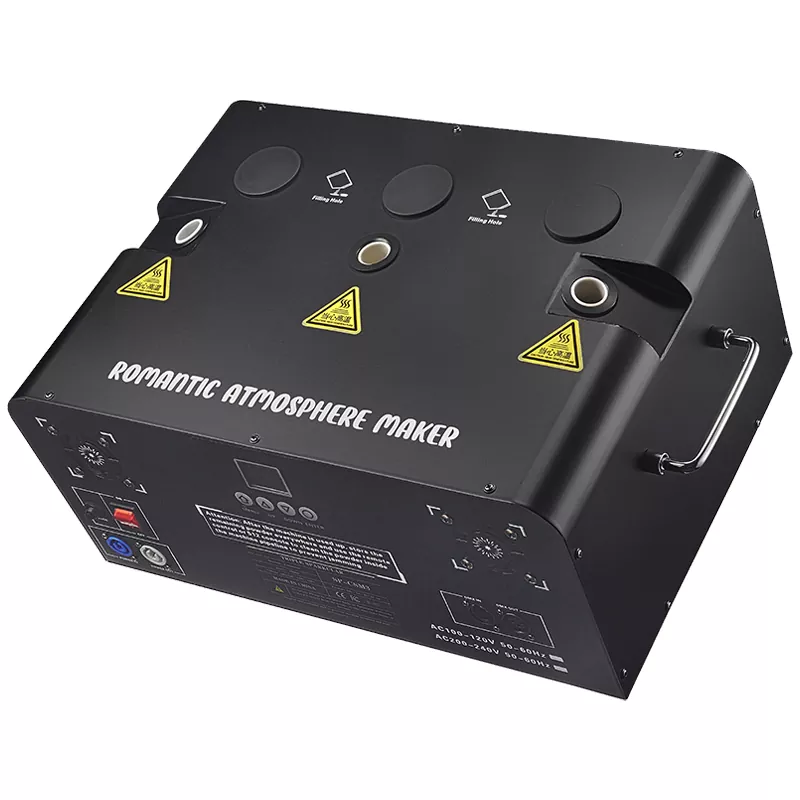
Chapter 2: Why Your Sparkle Machine Isn’t Working – A Multidimensional Analysis
When your sparkle machine fails to produce sparks—or produces weak/dull sparks—it’s rarely due to a single cause. Drawing from our technical documentation, user manuals, and real-world field data, we categorize failures into three primary groups:
2.1 Mechanical Jams and Blockages
This is the most frequent physical cause of failure, especially within the feeding mechanism.
Auger Screw Seizure: Titanium powder and other metal alloys are fine-grained and inherently sticky. If large amounts of powder are dumped directly onto the screw, or if powder clumps form after prolonged storage, the auger can become lodged against the tube wall. One patented design document explicitly notes that traditional configurations allow powder to bury the screw entirely, causing jams. When the motor cannot turn the screw, powder delivery stops completely—and the overcurrent protection (fault code E2) is the electrical system’s response to this mechanical lockup.
Air Vent Blockage: Air intake vents or slots along the delivery tube are designed to supply oxygen, aiding pre-combustion. But over time, metal powder accumulates and sinteres onto the vent walls, eventually sealing them shut. Without sufficient oxygen, powder exiting the nozzle won’t combust—you’ll see dust but no sparks. This problem is especially severe with traditional round-hole vent designs.
Nozzle Clogging (Coking/Slag Build-Up): If you skip the cleaning procedure after each use, residual hot powder cools and solidifies inside the nozzle, forming hard deposits. This “coke” gradually narrows the outlet, reducing spark height and density until the nozzle is completely blocked.
Foreign Object Intrusion: Stage environments are full of dust, fibers, and small debris. User manuals explicitly warn: “No foreign objects may enter the nozzle or air intake—this will damage the machine.” A screw, staple, or piece of tape caught in the auger or fan blades can instantly lock the mechanism.
2.2 Temperature Control Failures and Heating Abnormalities
Temperature is the “soul” of sparkle machine operation. If it’s not precisely regulated, the machine will refuse to run.
Preheat Failure / Heater Malfunction: After power-on, if the heating rod is burnt out, the power supply is insufficient, or the thermocouple provides incorrect readings, the system won’t reach its target temperature within the allotted time (e.g., 10 minutes). The controller will trigger a “heating failure” error (E1) and block any spark commands—preventing cold powder from entering the hot zone and causing a catastrophic jam.
Thermocouple (Temperature Sensor) Faults: An open circuit, short circuit, or loose connection in the thermocouple wiring results in error codes E3 or E4. If the control board can’t read reliable temperature data, safety protocols immediately cut power to the heater and lock the machine.
Overtemperature Protection Activation: Continuous sparking for too long (e.g., exceeding 30 seconds) or a failed cooling fan that allows internal cabinet temperatures to rise above safe limits (typically 60°C ambient or 700°C core) will trigger an emergency shutdown (E0 or E6). This prevents self-ignition or catastrophic component failure.
2.3 Electrical and Control System Anomalies
Power Supply and Overload Issues: Sparkle machines typically draw 400W–600W. Using excessively long extension cables, undersized wire gauges, or daisy-chaining too many units on a single circuit can cause voltage drops and insufficient current. This leads to erratic operation (error E8) or permanent damage. Connecting more than 6 machines in series on one power line is strictly forbidden in all manufacturer guidelines.
Blower/Fan Failure: The blower or high-pressure fan is responsible for propelling heated powder out of the nozzle. If the fan motor fails, the fan runs at reduced speed, or the airflow path is obstructed, even properly heated powder won’t be expelled. Worse, hot air may backflow and damage internal components. Some models have dedicated fan-error codes and protection logic.
DMX Signal Interruption: In DMX512-controlled setups, a loose signal cable, incorrect address settings, or a control console that isn’t sending data will cause the sparkle machine to remain completely silent. This is a “false failure” caused by operator error—and one of the most overlooked issues on busy stages.
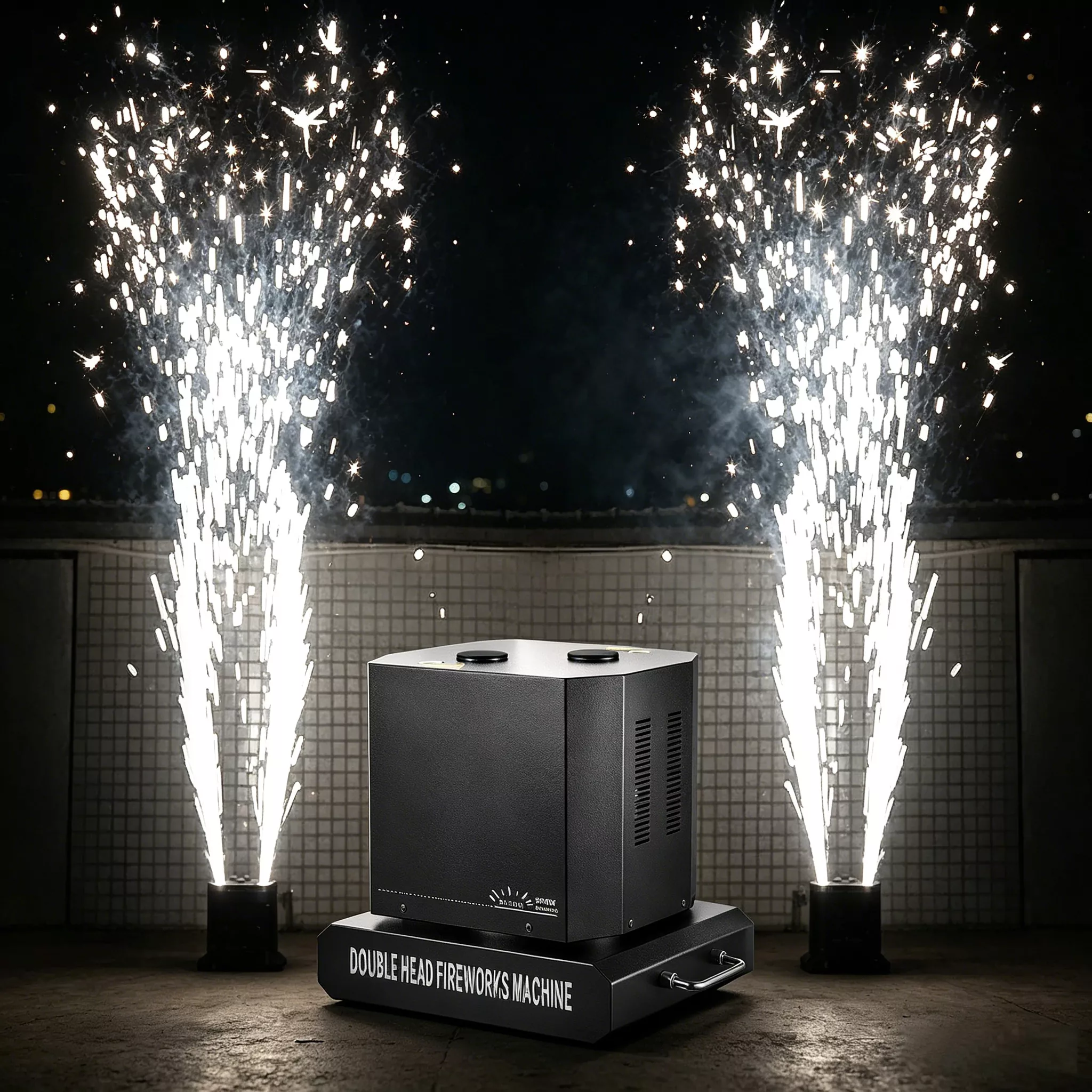
Chapter 3: Systematic Fault Diagnosis and Troubleshooting Workflow
When a sparkle machine goes offline, follow this principle: “Outside-in, simple-to-complex, electrical-before-mechanical.”
3.1 Rapid On-Site Checks (For Operators)
In a high-pressure live-show environment, follow this quick checklist:
Inspect Power and Signal Cables: Is the power plug fully seated? Has a circuit breaker tripped? Is the DMX cable firmly connected? Is the corresponding channel fader on the console raised? Check the machine’s indicator LEDs—steady lights usually mean a fault, while blinking indicates normal stand-by.
Read the Error Code: Most modern sparkle machines feature a digital display showing alphanumeric codes (E0–E8). Refer to your manual to pinpoint the issue. For example, E2 points to a feed jam; E1 indicates heating failure.
Listen for Unusual Sounds: After the preheat cycle is complete, trigger a spark burst. Can you hear the motor and fan running? If the motor is silent and you see an overcurrent error, the auger is almost certainly seized. If the motor is running but no powder emerges, you’re either out of material or the feed mechanism has broken.
Inspect the Nozzle and Powder Hopper: Visually check the nozzle for obvious slag build-up. Verify that the hopper contains sufficient powder and that the powder isn’t clumped or damp.
3.2 Deep Cleaning and Mechanical Resolution
Clearing Auger Jams: If you confirm a seized screw (common with E2 errors), power off the unit and open the side panel. For belt-driven augers, try manually rotating the screw counterclockwise to dislodge hardened material. Empty all remaining powder from the hopper, then run the “empty” or “purge” cycle to flush out residual debris. If the screw still won’t turn, you’ll need to disassemble the feeding assembly and manually remove caked powder.
Unclogging Air Vents and Nozzles: For blocked air vents, use a fine steel needle or high-pressure air gun to remove carbon and powder deposits—but only after the machine has cooled completely. For nozzle coking, carefully scrape deposits with a wooden or brass tool to avoid scratching the inner surface. Never use steel tools on the nozzle interior.
Removing Foreign Objects: If you suspect foreign objects inside, gently tilt or invert the machine while shaking it to dislodge debris through the air intake. If this fails, disassembly is unavoidable.
3.3 Electrical and Heating Component Inspection (Qualified Technicians Only)
Heater Resistance Test: Use a multimeter to measure the resistance of the heating rods. An open circuit means replacement is required. Check thermocouple connections for tightness. Compare the temperature reading on the display against an independent thermometer probe—if they differ significantly, replace the sensor.
Cooling System Check: If overtemperature alarms (E0/E6) appear, verify that the cooling fan is spinning freely. Clean the intake air filter of accumulated dust. Ensure adequate clearance around the machine—it should never be placed against drapes or inside confined enclosures.
Voltage Load Test: Measure the input voltage under full load. It should remain within the rated range (e.g., AC 220V ±10%). If voltage drops excessively, upgrade your extension cables or reduce the number of machines daisy-chained on the same circuit.

Chapter 4: Preventive Maintenance and Standard Operating Procedures
Based on our field data, the vast majority of sparkle machine failures are directly caused by poor maintenance and operator negligence. Building a disciplined maintenance culture is the single most cost-effective way to ensure flawless performances.
4.1 The “Purge” Procedure – Your Most Important Daily Habit
After every performance, you MUST run the purge/cleaning cycle. This isn’t optional—it’s essential for both next-show reliability and long-term equipment life.
Empty the Hopper: Remove any unused powder from the hopper and store it in sealed, airtight containers in a dry environment. Moisture absorption is the #1 cause of powder clumping and auger blockages.
Burn Off Residuals: With the hopper empty, restart the machine, allow it to reach operating temperature, and trigger the purge function. Continue until no sparks and no visible powder emerge from the nozzle—this typically takes about 30 seconds. This removes every trace of residual hot powder that could cool and form hard deposits.
Clean the Nozzle: After purging, visually inspect the nozzle. If any residue remains, remove it immediately with appropriate tools.
4.2 Essential Operating Rules
NEVER exceed 30 seconds of continuous sparking. This is a hard limit. Prolonged firing causes internal temperatures to soar, triggering thermal shutdown or causing permanent damage to the heating chamber. For extended effects, use multiple machines in rotation or group-control sequencing.
Maintain vertical orientation: The machine’s operating tilt angle must not exceed 10°. Tilting causes uneven powder distribution in the hopper, leading to either empty feeds or overloaded augers.
Use only manufacturer-recommended consumables. Different powder formulations have different ignition temperatures. Mixing powders can result in incomplete combustion, weak sparks, or even explosive deflagration. If powder ignites accidentally, NEVER use water—smother with sand or a Class D fire extinguisher.
4.3 Scheduled Deep Maintenance
Every 100 cumulative operating hours, schedule a thorough inspection:
Check graphite bearings for wear—excessive play causes auger runout, noise, and eventual seizure.
Test heating element insulation resistance.
Clean control boards with anti-static brushes.
Tighten all terminal screw connections.
Conclusion
A stage sparkle machine that “won’t work” isn’t a random stroke of bad luck—it’s the predictable outcome of coupled mechanical, thermal, and electrical stress. From microscopic vent blockages to aged heating elements, from seized augers to failed blowers, every failure mode points to a deeper truth: precision equipment demands precision care.
As a stage technology professional, your real “troubleshooting” should happen before the show. Rigorous post-show purging, strict adherence to the 30-second duty cycle, careful moisture control, and proper power management—these “boring” routines are what actually guarantee those breathtaking spark fountains will ignite on cue.
But when failures do occur, a calm, systematic diagnostic mindset—moving from the simple to the complex, from the electrical to the mechanical—will always lead you to the root cause. And that’s how you turn a potential show-stopping crisis into just another solved problem, letting the sparks fly once again.